



Top Ecommerce Companies in the USA: The 100 Brands Winning the Traffic Race in 2026
by Inbar Eytan6 Min.
Aug 30, 2026

Primary market research gives you the direct feedback you need, from those who matter most to your business.
By knowing what makes people tick, and what ticks them off, you can tailor your positioning, messaging, and approach.
Ready to find out more about the what, why, when, and how to do primary market research right?
Then let’s begin:
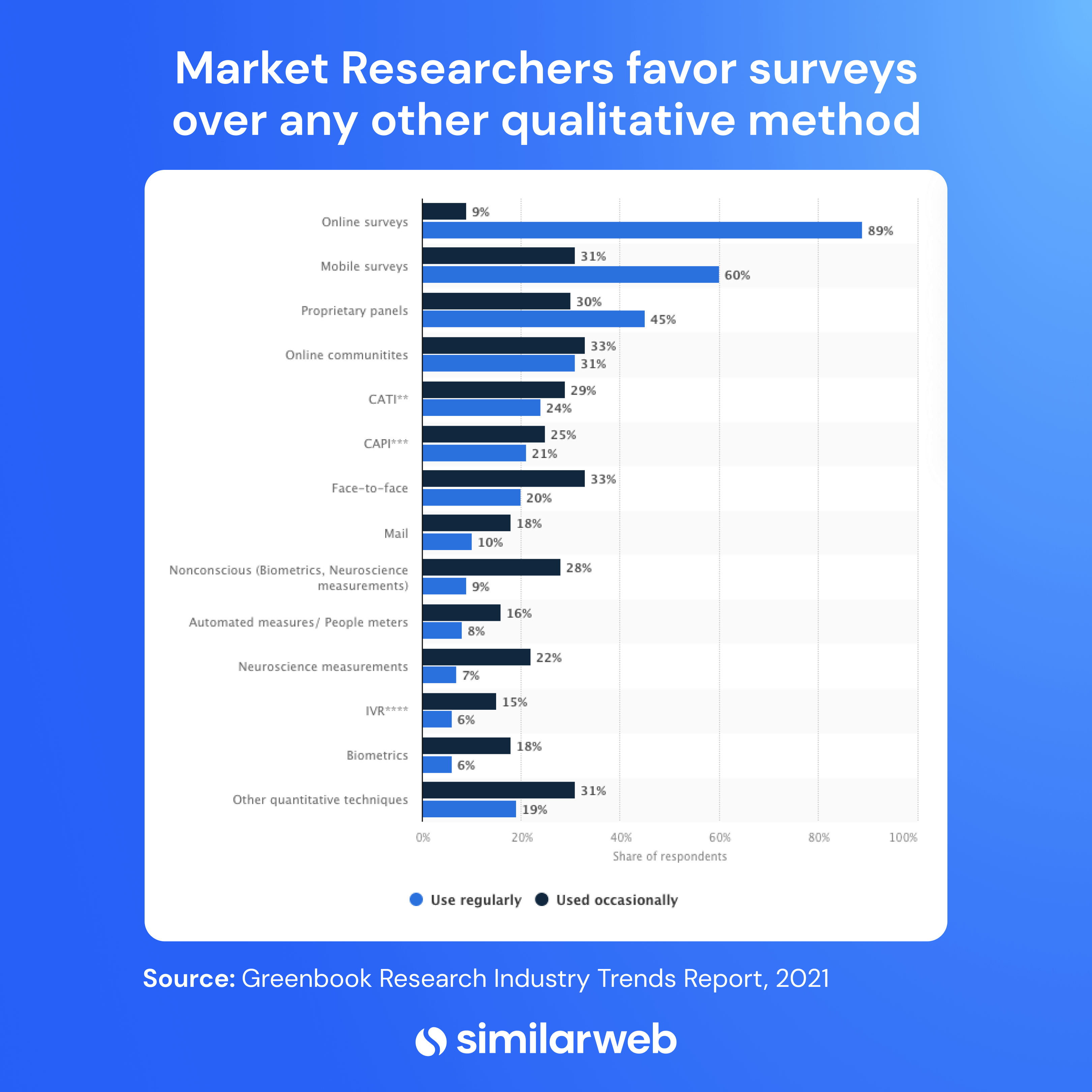
Primary market research is direct, first-hand data collection by an individual or organization. The most popular form of primary research is market research surveys. But other primary research methods like focus groups, interviews, and observational research deliver vital insights that can shape and determine critical strategies for efficient growth.
Primary market research helps organizations:
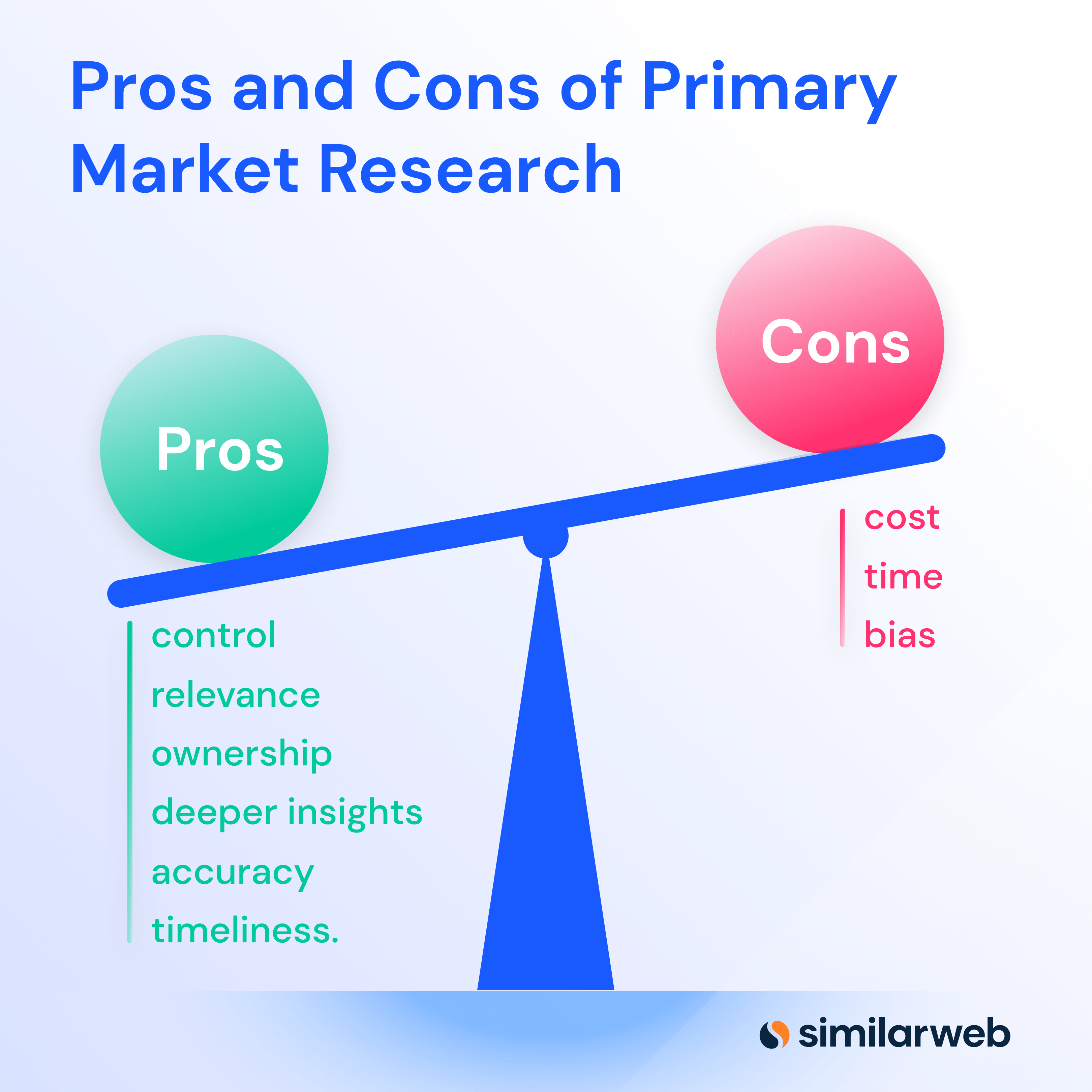
As with all types of market research, there are pros and cons to consider before choosing which route is best.
Let’s take a look at them now.
Primary market research does have some limitations. Here are three to consider.
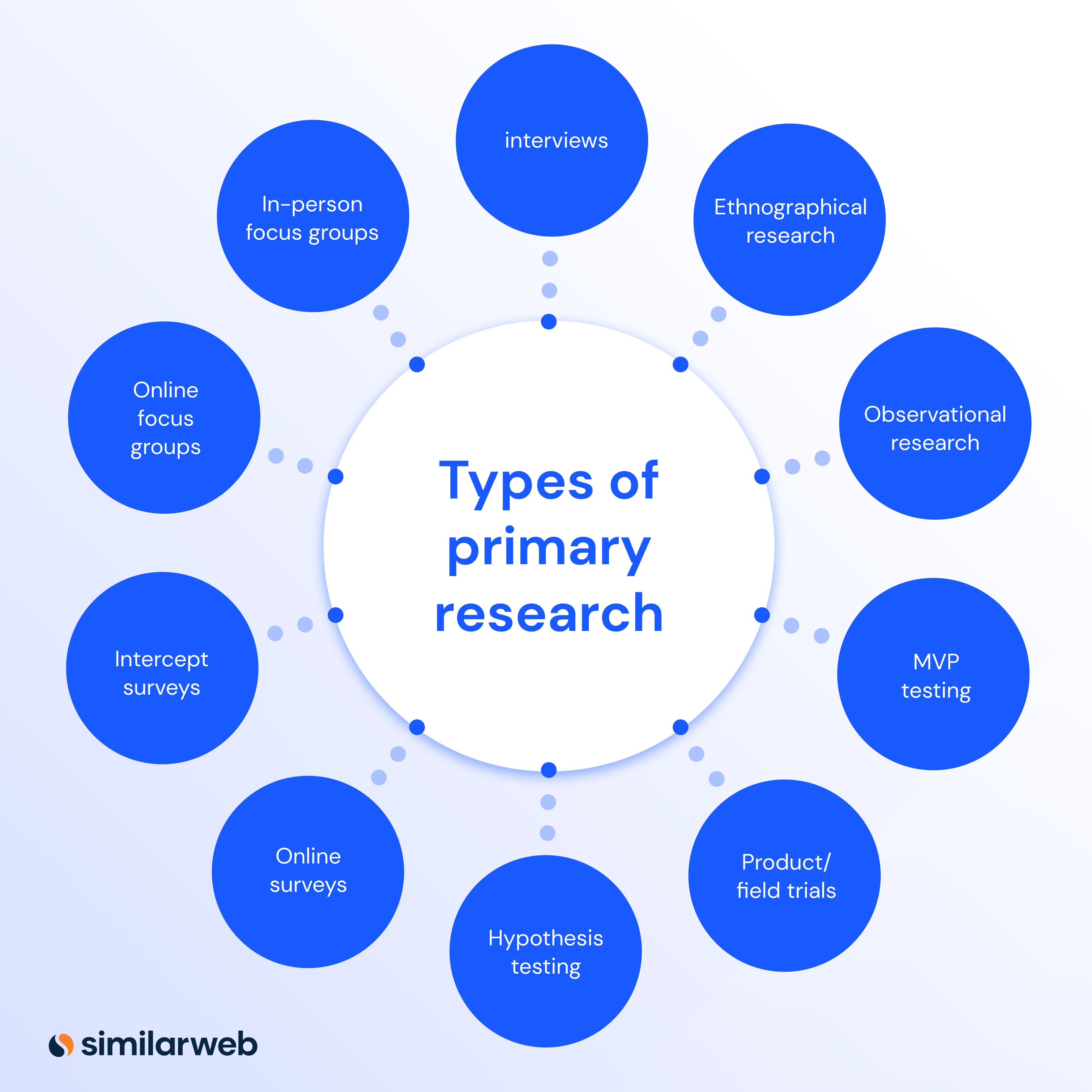
Knowing which type of primary research is right for you will depend on the problem you’re trying to solve and the questions you want to answer.
Here are 11 of the most popular primary market research methods being used today.
These are useful with customers or prospects, and they’re also fairly easy to arrange and conduct. When creating interview questions, ask open-ended questions to get unrestricted answers.
These are focused interviews with people of strategic importance, and follow a structured or unstructured format. You can either follow a specific set of questions or conduct a free-flowing interview that allows for greater flexibility. An IDI usually lasts for between 20-30 minutes.
Pro Tip: Beware of bias
This focuses on following individuals, one at a time. A trained observer will immerse themselves in an environment (think a store or home), and observe how people behave and interact with the things around them. Brand marketers, product developers, and designers then benefit from seeing and understanding these interactions. It requires more time and money compared to other methods.
Observational research is often favored by smaller businesses and startups and monitors numerous people in a single location. Here, one person gathers insights from a large group in a single session or day, making it cost-efficient. The researcher focuses on how people stop outside a store, if there are specific things they seem drawn to in a display, and the direction they take when heading inside.
Involves testing a product or new feature before it’s taken to market. The goal is to gauge a market’s reaction and gain feedback to improve or adapt future features. There are two ways to do this.
Doing trials is a great way to get feedback about the product or their experiences. This can be particularly useful for product development and marketing. In field trials, variables and hypotheses can be tested in a controlled environment or in the field.
Although lots of companies use free trials as a conversion path, it’s also an incredibly valuable way to get feedback from users about the things they like or dislike, as well as potential features they’d like to see in the future.
Used with existing products through either multivariate or A/B testing. This type of research can help with things like pricing evaluation across different audiences or markets. It can also look into web page specifics, conversion effectiveness, and more. By taking an experimental approach it helps organizations establish optimal strategies for product, pricing, positioning, and core messaging.
In a primary market research context, Market research surveys capture numerical data for a relatively low cost. Online surveys are quick to set up and can be easily sent to both existing and prospective customers. When used in primary market research, it’s important to get the length just right. Go too long; boredom creeps in, and they’ll give up. Too short, and you risk not getting enough viable data for a complete picture.
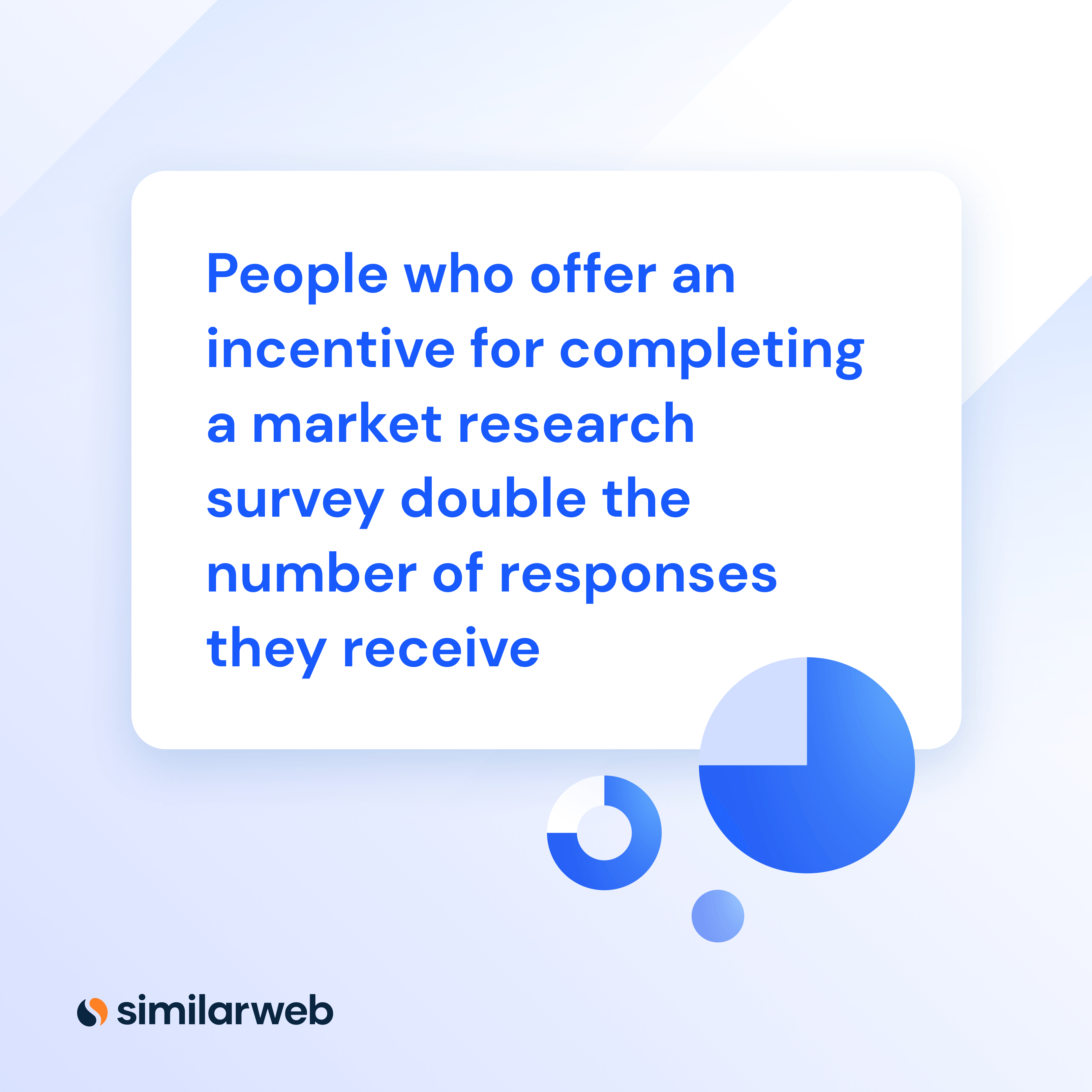
Pro Tip: If you’re targeting an important group of people with a survey, consider an incentive.
Why?
The National Center for Biotechnology Information (NCBI) conducted almost 50 separate studies on the topic; their findings confirmed that monetary incentives doubled the number of completed responses. From charitable donations and gift cards to PayPal credits, people are more likely to complete surveys when there’s something in it for them.
If you’ve ever spotted a tablet asking you to rate the service or experience you had in a store/facility, then you’ve experienced intercept surveys at work!
One of the biggest advantages of intercept surveys is that they target all visitors. Unlike traditional survey formats that require an email address, this style of survey can reach all demographics and give you instant feedback. What’s more, they’re easy to organize and analyze.
These days, most organizations tend to favor online focus groups. Organizing and expending is far easier as there’s no need to factor in travel, venue hire, and sustenance costs. It’s also far easier to get people to commit to a quick video focus group compared to in-person set-ups.
Physical focus groups are still strong, and people prefer them for many reasons. Body language is far easier to interpret when people are in the same location, and there’s the added benefit of stronger in-group dynamics too. So, while they cost more, take a little longer to organize, and you have the added burden of knowing whether or not participants will show up, there are still plenty of reasons to use them. Convenience isn’t always king.
There are many methods of primary market research at a company’s disposal. Finding the right type for your research goal, budget, and time considerations is key to unlocking success. Here are three examples of primary market research in action, to give you a touch of inspiration.
1. Ethnographic research
I spoke directly with Umair Syed of Bizitron, he explained how his digital market agency favors ethnographic research for uncovering key consumer insights for big brands.

2. Customer satisfaction survey – low-cost example of primary research

This is a great primary market research example in action using an online survey format. Customers are asked if they’d like a receipt emailed: if they do, they receive a survey after their visit. Key questions provide the organization with clear ratings around their experience. Open-text boxes are also used to gather specifics if a score is particularly good or bad.
3. Focus groups & interviews
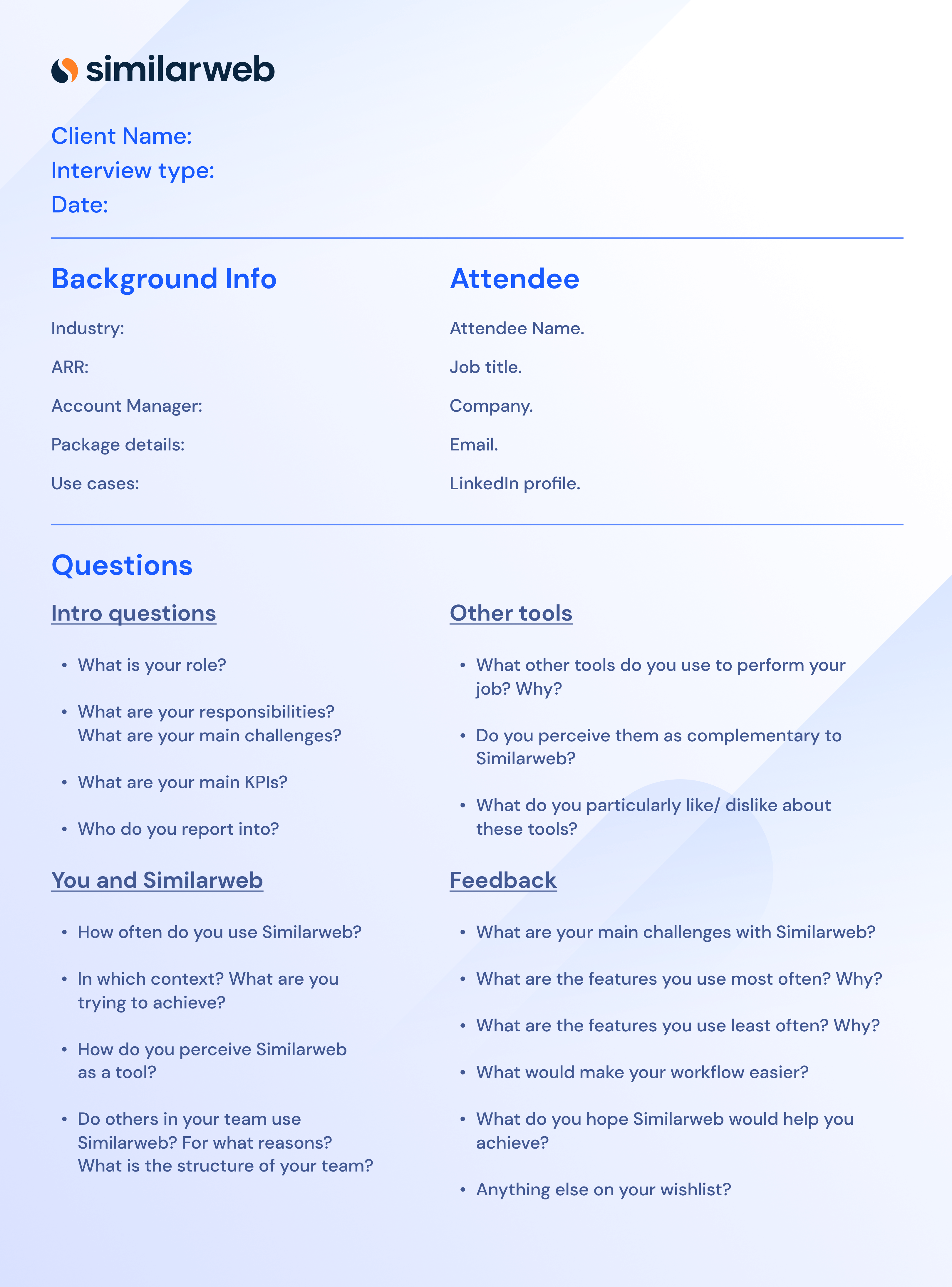
Another widely used primary market research method is the interview. Here’s a sample of some of the focus group questions we use at Similarweb. The biggest advantage of using this format is that any audience can be reached and interviewed remotely. Costs are low, and you can reach a wide and varying audience with granular feedback.
While it takes time to conduct this type of primary market research, it gives organizations the ability to pick and choose who they want to speak with and opens up the floor to ask them very specific, open-ended questions that have the power to deliver insights you might not be able to get from other primary research methods.
If you run a trial or release an MVP, you can use a survey for primary market research questions like these:
If you want to conduct an interview, here are some examples of the typical types of primary research questions you might ask.
Similarweb Web Intelligence gives you instant access to data that shows you things like audience insights, search interests, overlap, loyalty, and demographics.
Let’s say you’re planning to expand into a new category and want to research the market to capture a new audience or understand consumer demand before you spend time and resources on product development.
For example, launching a new urban e-bike service. You’ll want to reach a new audience, but the problem is you don’t know what their interests are and how to approach them.
You’ll want to find out:
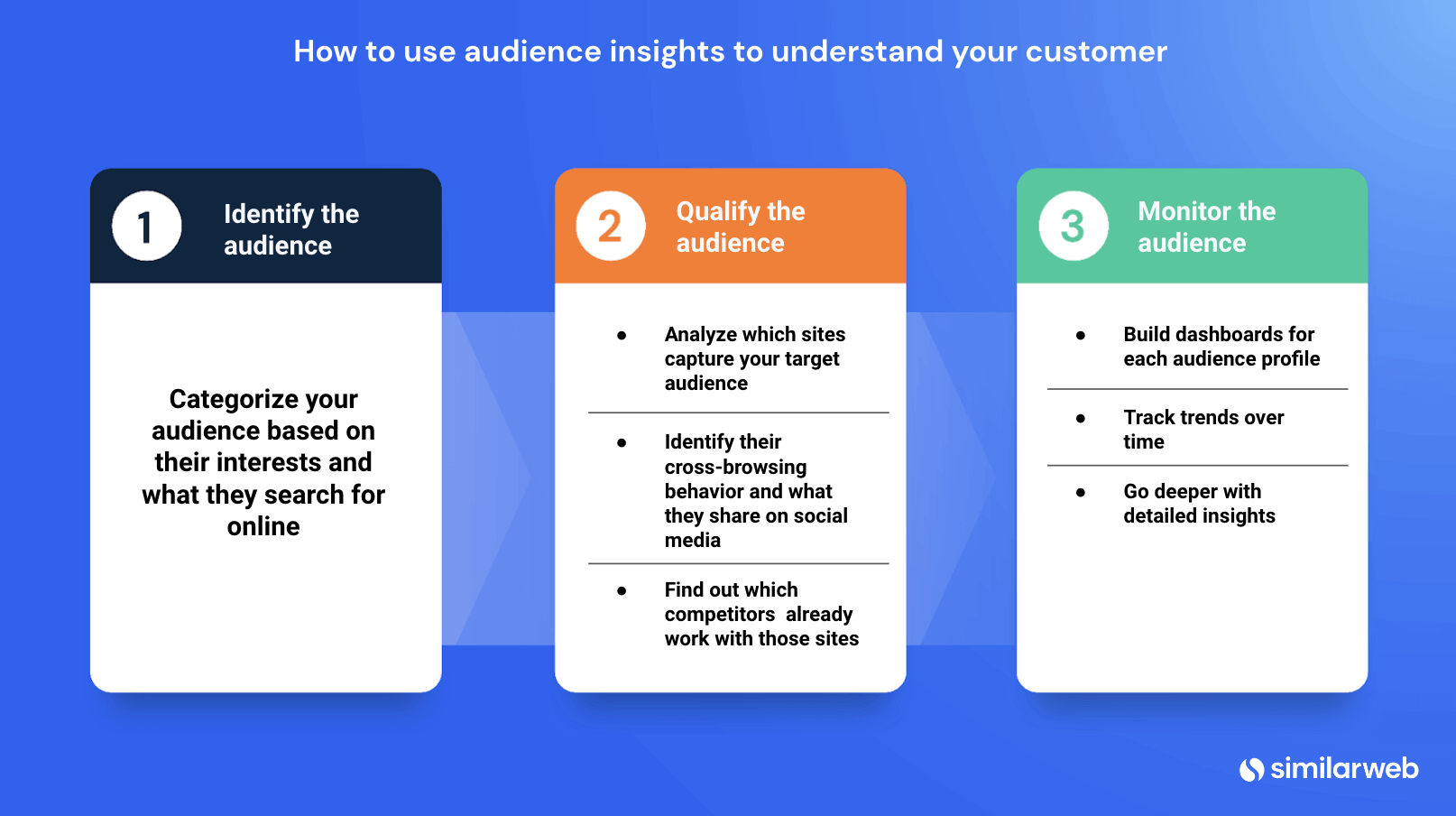
The first step is to identify the ideal customer profile of your target audience that you want to capture, so this could be various attributes. For the e-bike example, you’ll want to be engaging with people who are fit to cycle or have a need. For instance, they commute to work by bike or enjoy cycling as a hobby outside of work.
Other criteria could be around lifestyle, i.e., they want to live a balanced and healthy life. You can identify your audience through different ways, such as what they search for online or what they post on social media. For this example, we’ll dive into the healthy lifestyle audience cohort and build a profile around the search term “healthy snacks”.
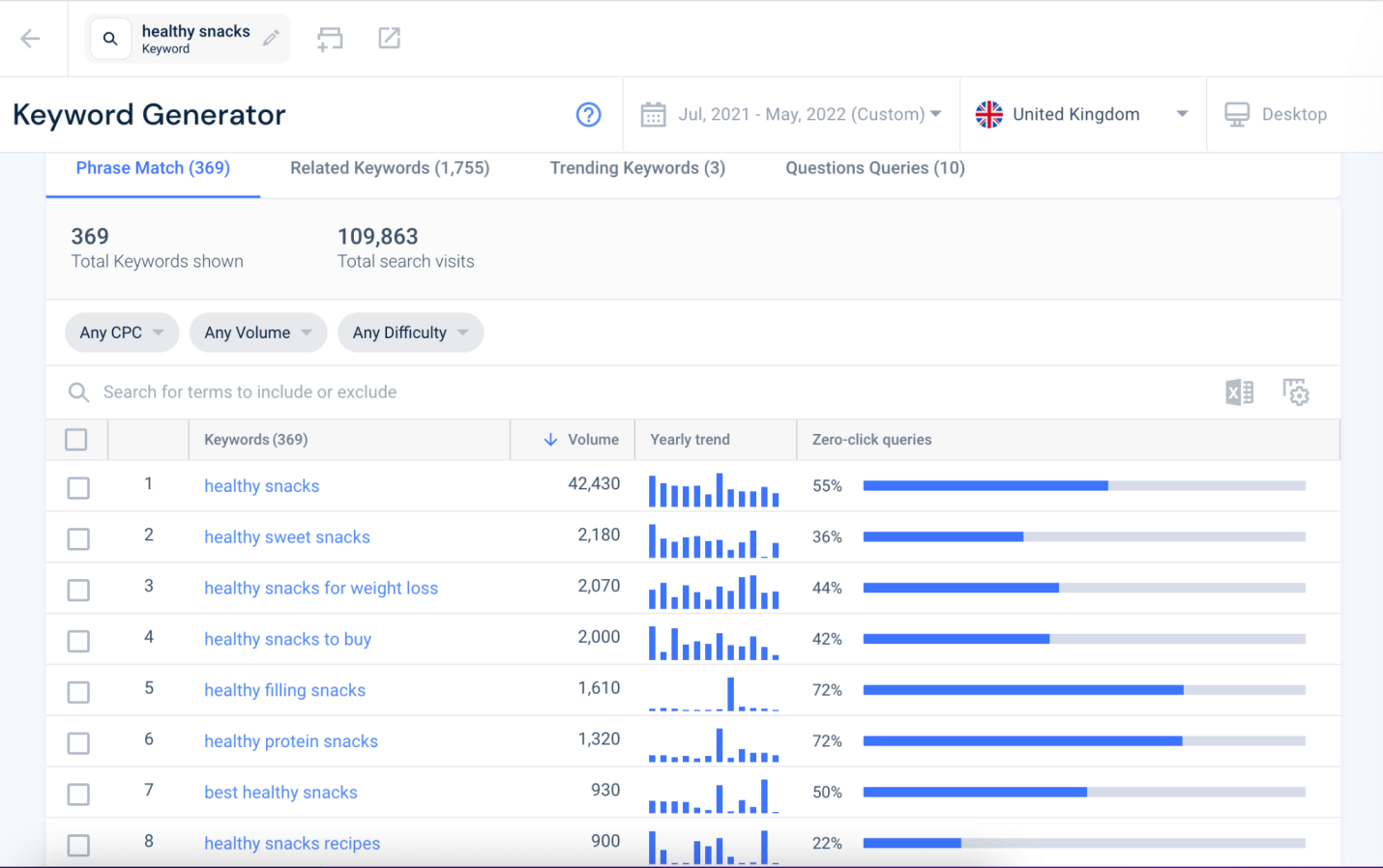
Using search terms such as ‘healthy snacks’, you can build a list of keywords. And group these keywords to essentially build a profile of your audience.
With this list, you can identify the types of sites that engage with your target audience and establish the total addressable market based on search volume and trends over time.
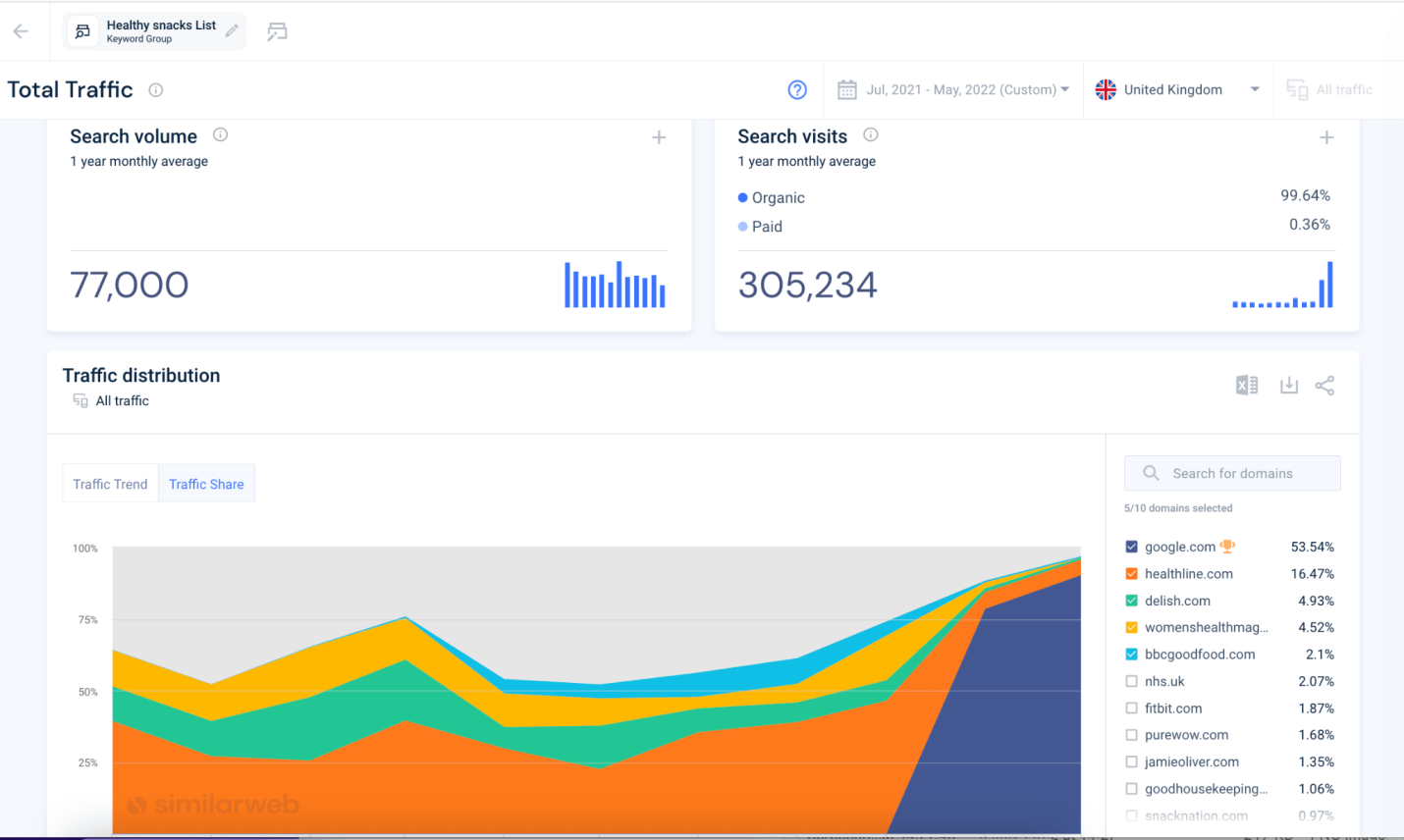
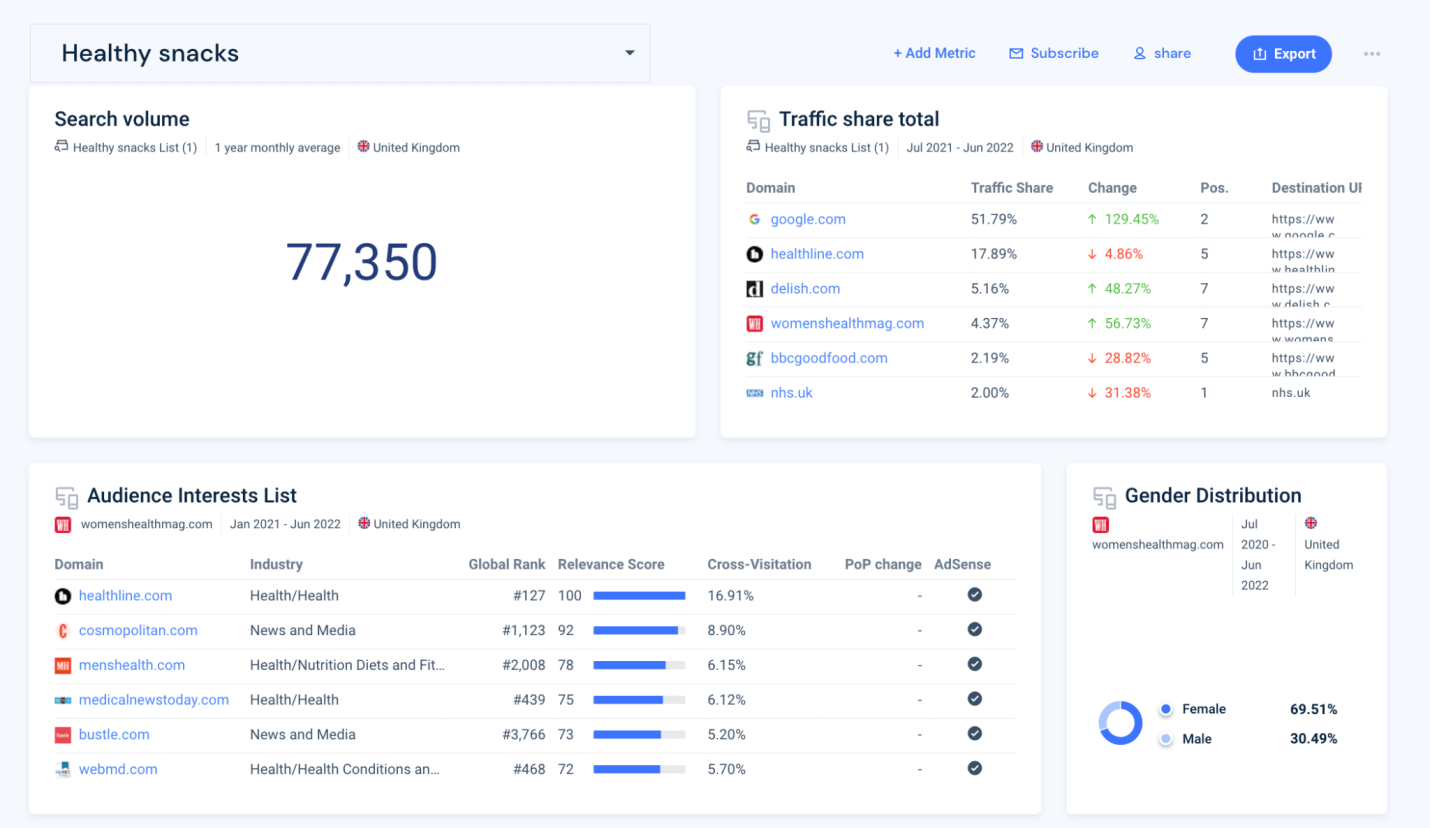
Here we can see the volume of searches for healthy snacks has a monthly average of 77,000 in the UK, along with the key players who capture traffic from this search term.
The next step is to identify sites and top mobile apps targeting your audience, i.e., people searching for “healthy snack”, and find sites based on relevant criteria such as age, gender, or type of site. Then you can expand your list by identifying other sites visited by the same audience and discover which of your competitors (in this case, similar cycle makers) are working with them.
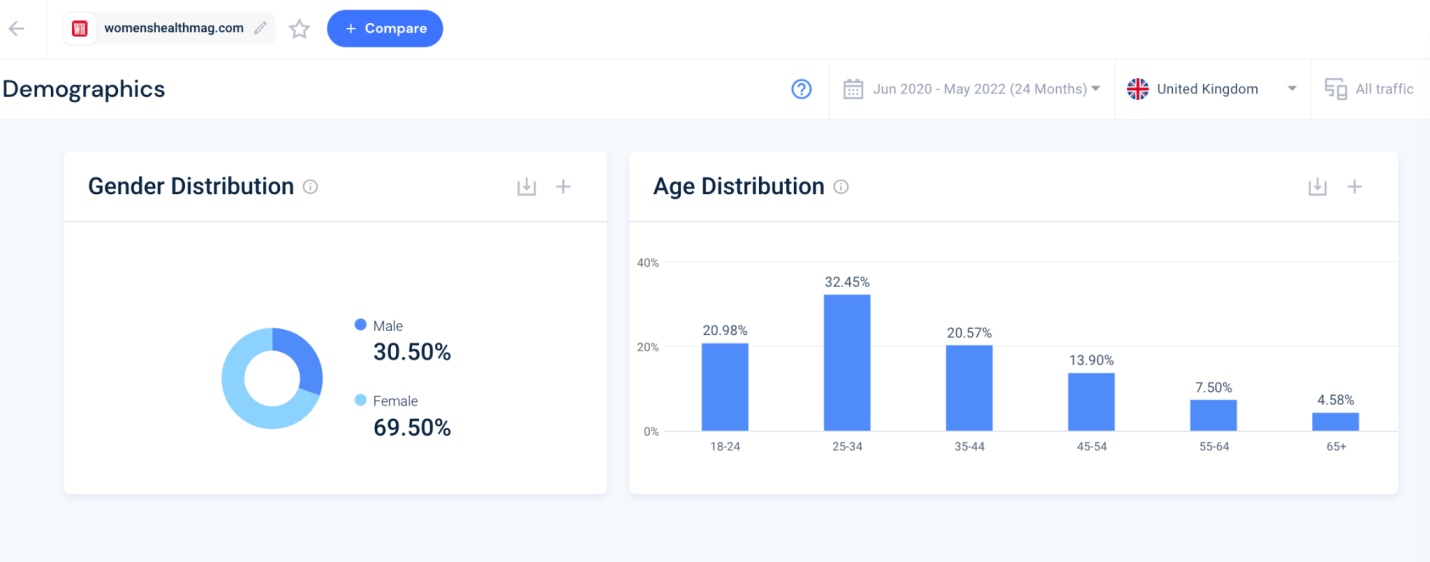
Here you can qualify the audience based on the sites that also target the “healthy snack” consumers, for example, Women’s Health, and dive into the demographics of that publication to see the gender split and age distribution.
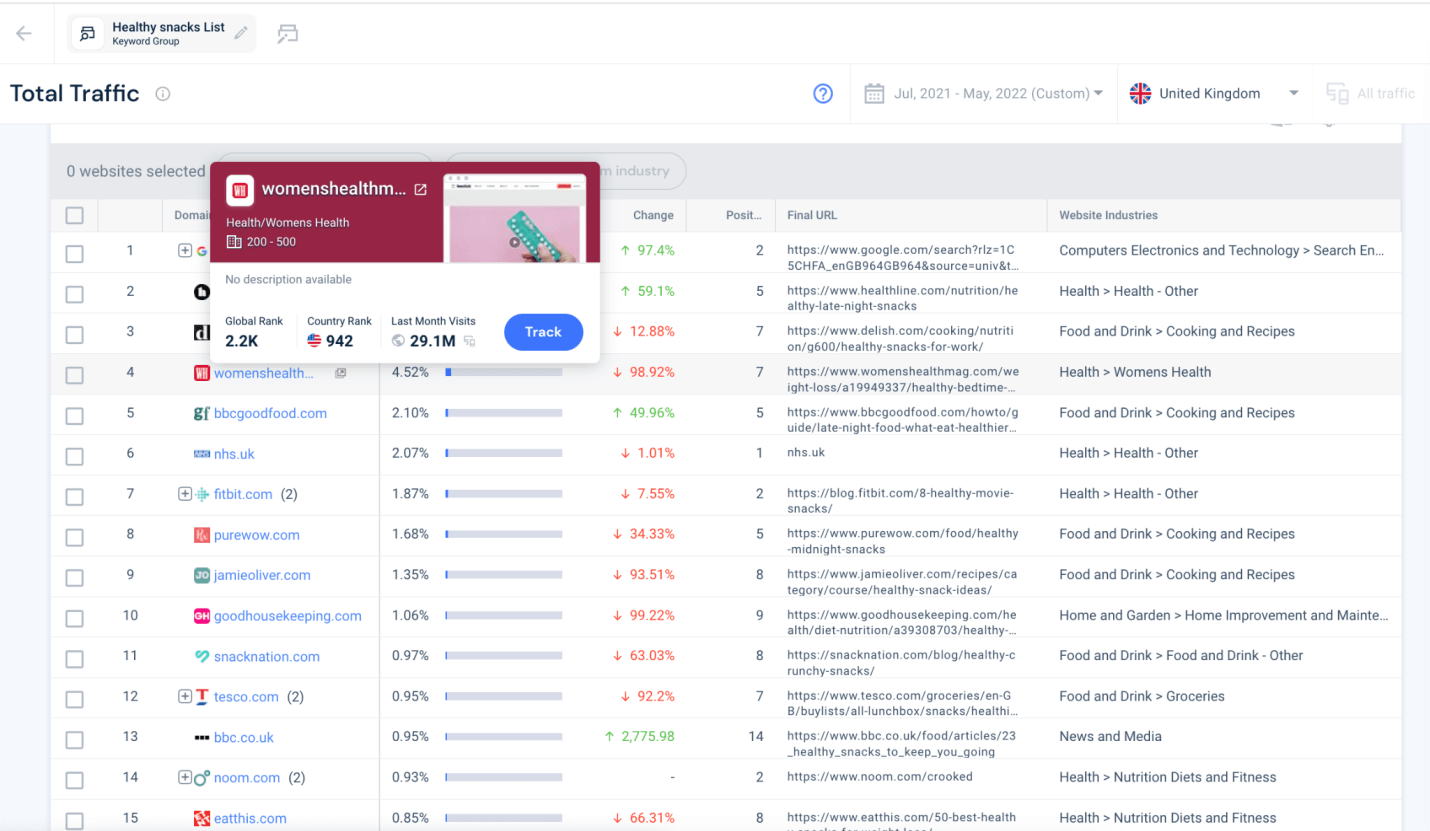
You can also expand this list by looking at Women’s Health readers and seeing which similar sites they cross-browse to build a richer view of their online media consumption and habits.
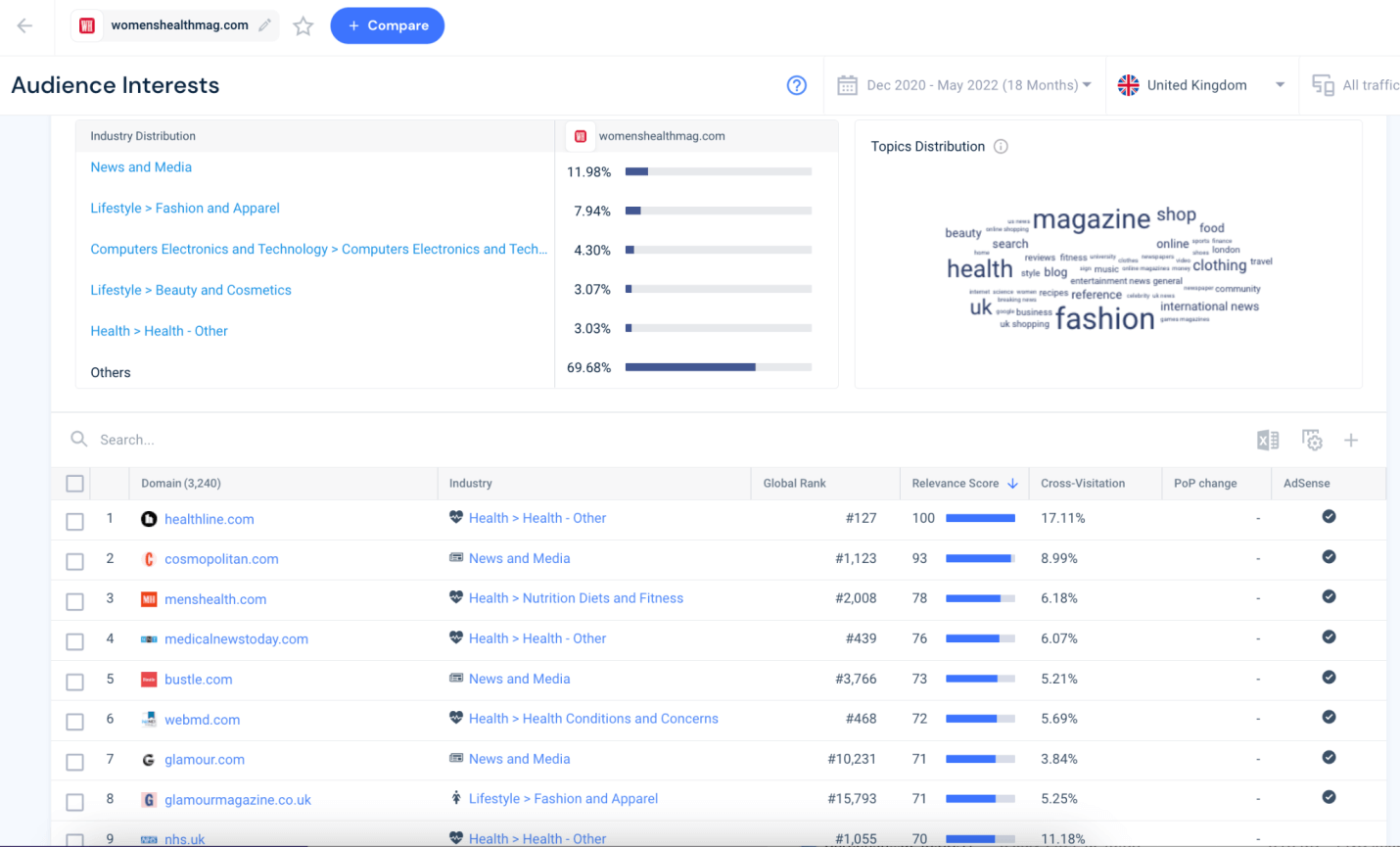
You can also further deepen your knowledge of each publication that attracts the “healthy snack” audience and see how your competitors, in this case, other cycle makers, work with the publication.
Either by identifying other sports and fitness sites that send traffic to Women’s Health, or a list of advertisers that typically promote their products.
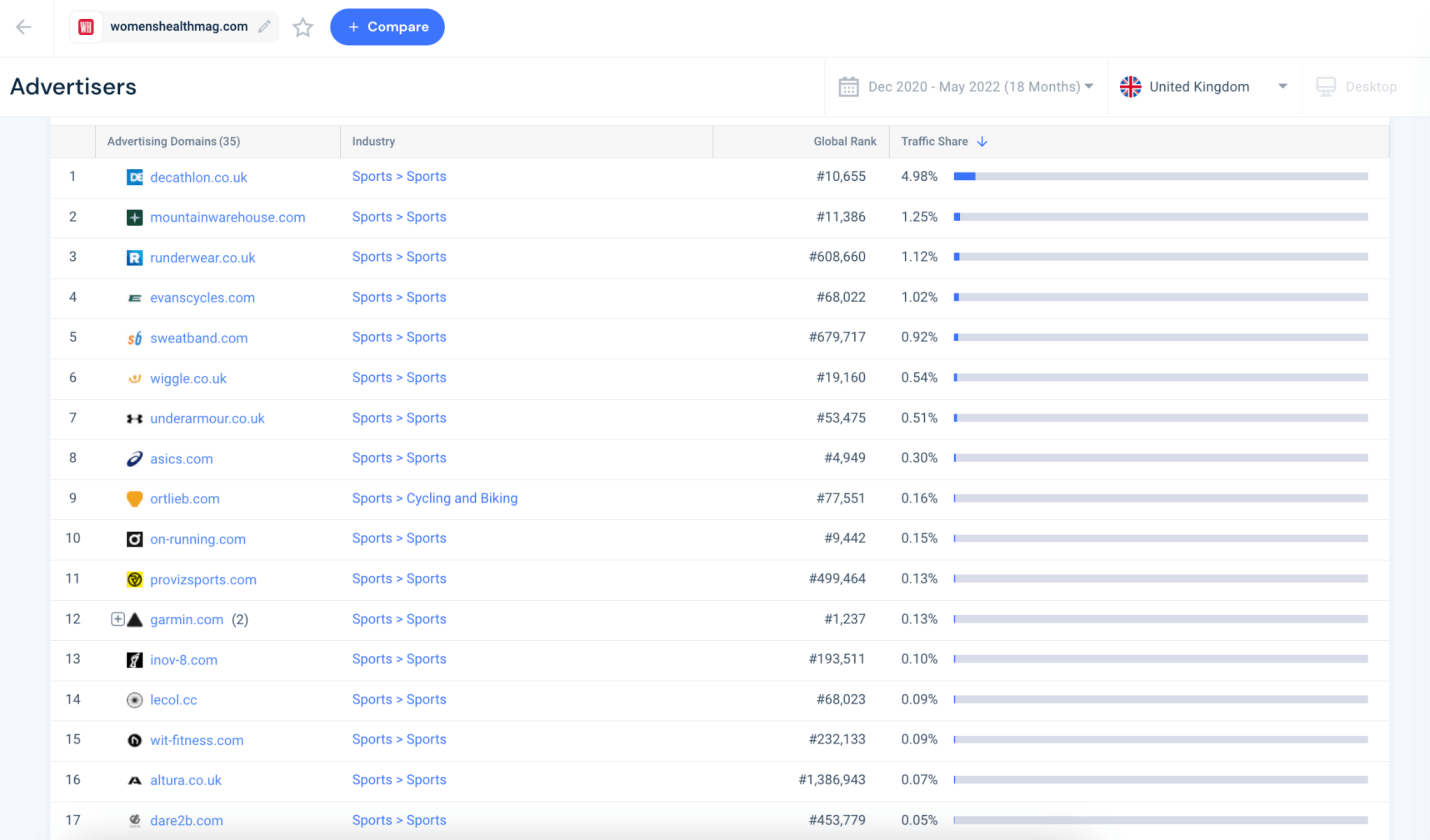
The final step is to build a dashboard with key metrics that include all the main audience profiles, such as search interests, demographics, other visited sites, partners, and advertisers, so you can monitor trends and changes over time.
This can be repeated for each audience cohort you create, so you can build a holistic overview of audience behavior online and discover consumer demand within minutes, not weeks or months.
Wrapping up…
Primary market research takes time. Once you’ve done the initial planning, coordination, and data collection, only then can you start to collate and analyze your findings. In some cases, it’s exactly what you need to power up your growth. On the other hand, you may need to work faster than primary market research permits. Whether it be to stay ahead of your rivals, keep up with shifting markets, or a change in consumer behavior.
If you need to quickly see what’s happening, Similarweb Web Intelligence is the best tool for the job.
Take it for a trial run (for free) today.
What is primary market research used for?
Primary market research helps organizations obtain direct feedback from a market that’s relevant, up to date, and usually focused on a specific theme or subject. It’s more controlled compared to secondary research and delivers more objective findings.
What is the difference between primary market research and secondary market research?
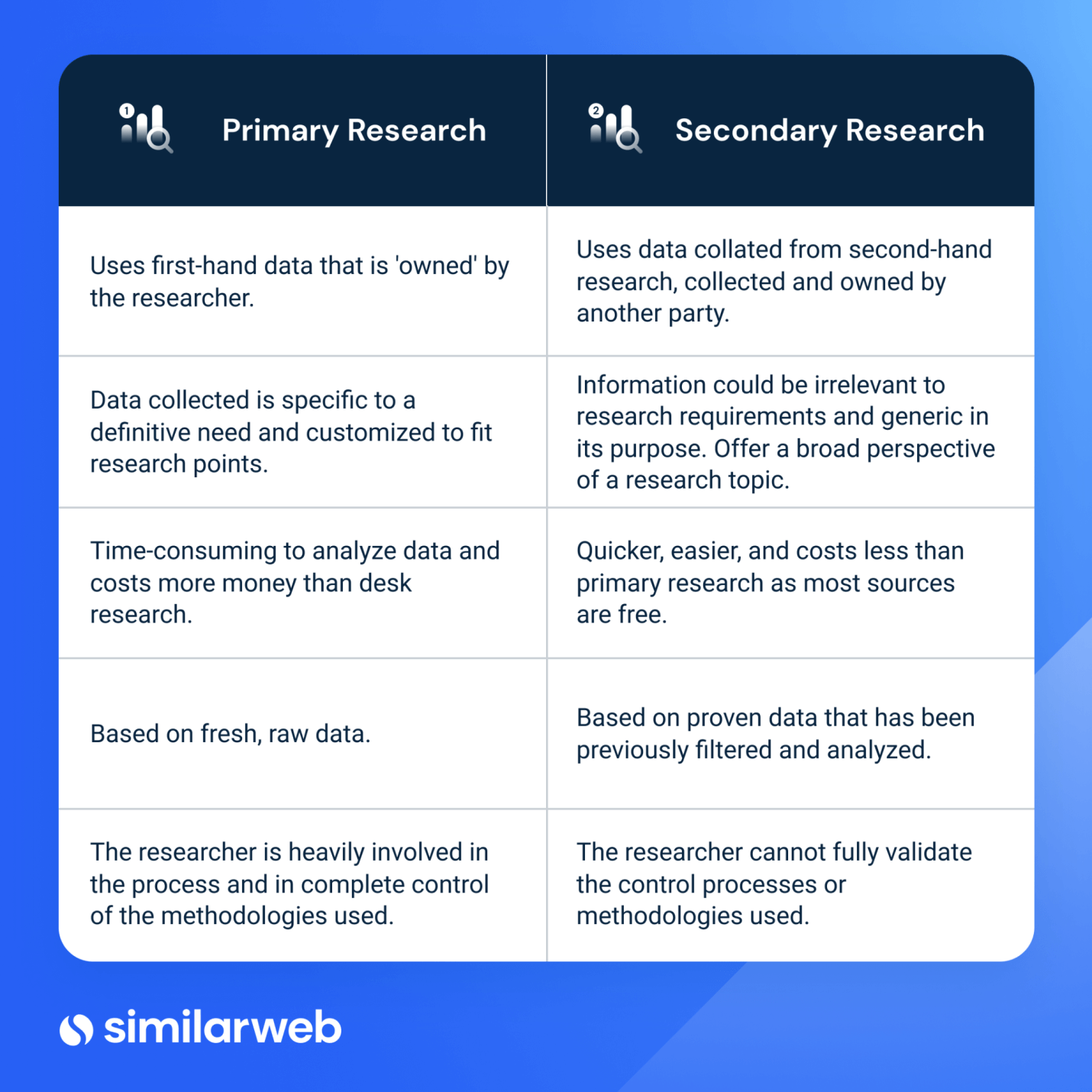
Primary market research is the first-hand collection of data, that is later analyzed and used to inform strategic decisions. The purpose of secondary research is largely the same, but this type of research takes pre-existing information, which costs less and is usually quicker to obtain.
What are primary market research examples?
The most popular primary market research methods include:
What technology is used in primary market research?
Modern primary market research involves using artificial intelligence, machine learning, and data analysis tools to collect and analyze data more quickly and accurately than ever. Automated survey tools and virtual reality simulations may also be employed.
How can Similarweb help with primary market research?
Similarweb can provide helpful insights into primary market research. It can provide data on website traffic, user engagement metrics, and competitors’ performance. This data can be used to make more informed decisions about product development and marketing strategies. In addition, Similarweb can provide market insights and help identify potential target audiences.

by Liz March
Digital Research Specialist
Liz March has 15 years of experience in content creation. She enjoys the outdoors, F1, and reading, and is pursuing a BSc in Environmental Science.
Top Ecommerce Companies in the USA: The 100 Brands Winning the Traffic Race in 2026

3 of the Sharpest Minds Weigh in on the State of Gen AI in 2026

Contact us to set up a call with a market research specialist
