TikTok Sets a Record and the RedNote Craze Subsides
by David F. Carr3 Min.
Jan 23, 2025
 Insights
Social app IRL turned out to be a digital version of a story that’s too good to be true. Tech investment powerhouse Softbank just filed a lawsuit for $150 million in damages, claiming it was deceived by falsified usage numbers that seemed to show rapid, organic growth back in early 2021 when Softbank led a $170 million investment round in IRL. At the time, IRL’s estimated valuation was $1.1 billion.
In June, IRL shut down following an investigation by its own board that found about 95% of the social network’s claimed 20 million active users were bots. Sadly, this is not the first time we’ve heard of major investor groups being led astray by self-reported and exaggerated user counts.
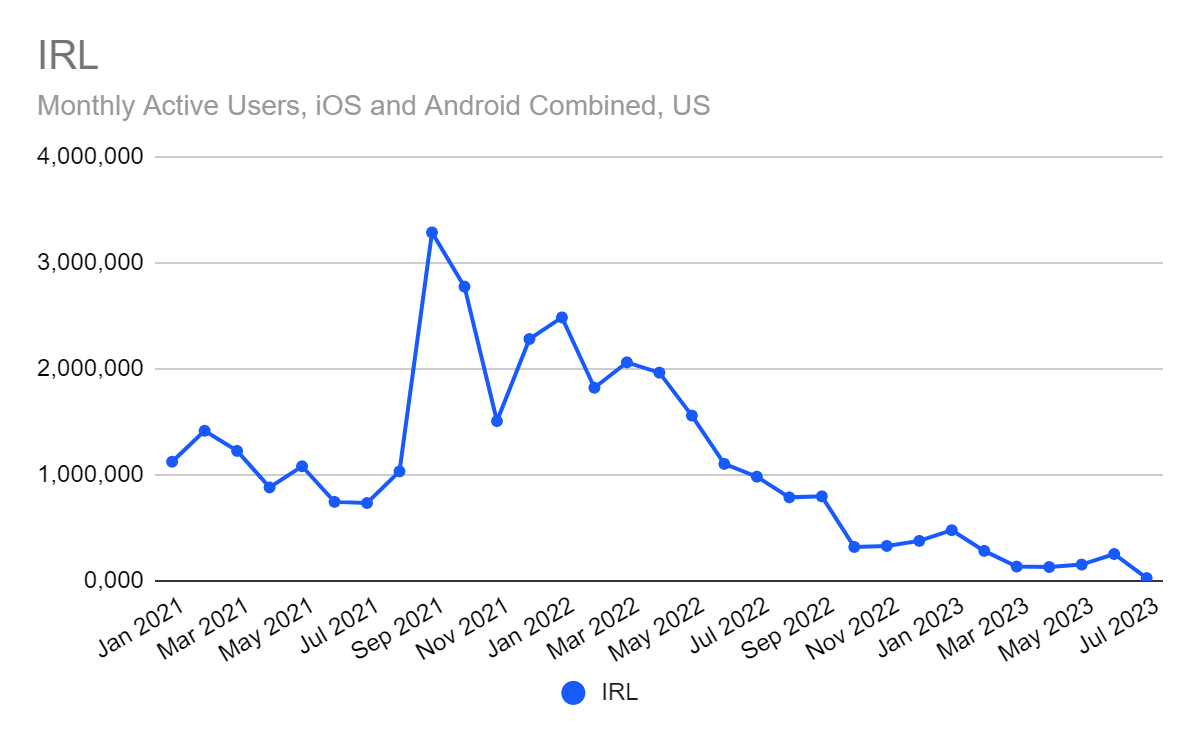
If Softbank was evaluating a deal like that today, we suspect they would take more time to consider external estimates of digital engagement. Consider these from Similarweb:
In other words, IRL was not quite the growth machine it claimed to be.
External estimates are what eventually made Softbank suspicious, TechCrunch reported in its story on the lawsuit:
When SoftBank accessed a third-party report on IRL’s total users and downloads, the data said that by spring 2021, IRL had only been downloaded 9 million times. Shafi, on the other hand, was claiming that the app had 12 million monthly active users, and that 2 million events got planned each day on IRL. Shafi explained away this discrepancy by saying that the number accounted neither for web sessions, nor underage users, whose data could not be shared.
“In reality, the platform was a virtual ghost town, filled with bots deceptively mimicking active human users,” SoftBank wrote.
One reason external estimates like those from Similarweb are important is that they tend to be relatively bot-free. As part of research conducted last year on bot versus human activity on Twitter (back when that was an issue in Elon Musk’s efforts to withdraw from his proposal to take over the company), our data scientists concluded that less than 1% of the activity tracked in our model was machine-generated.
IRL does seem to have enjoyed a burst of popularity, particularly in mid-2021, but it didn’t last.
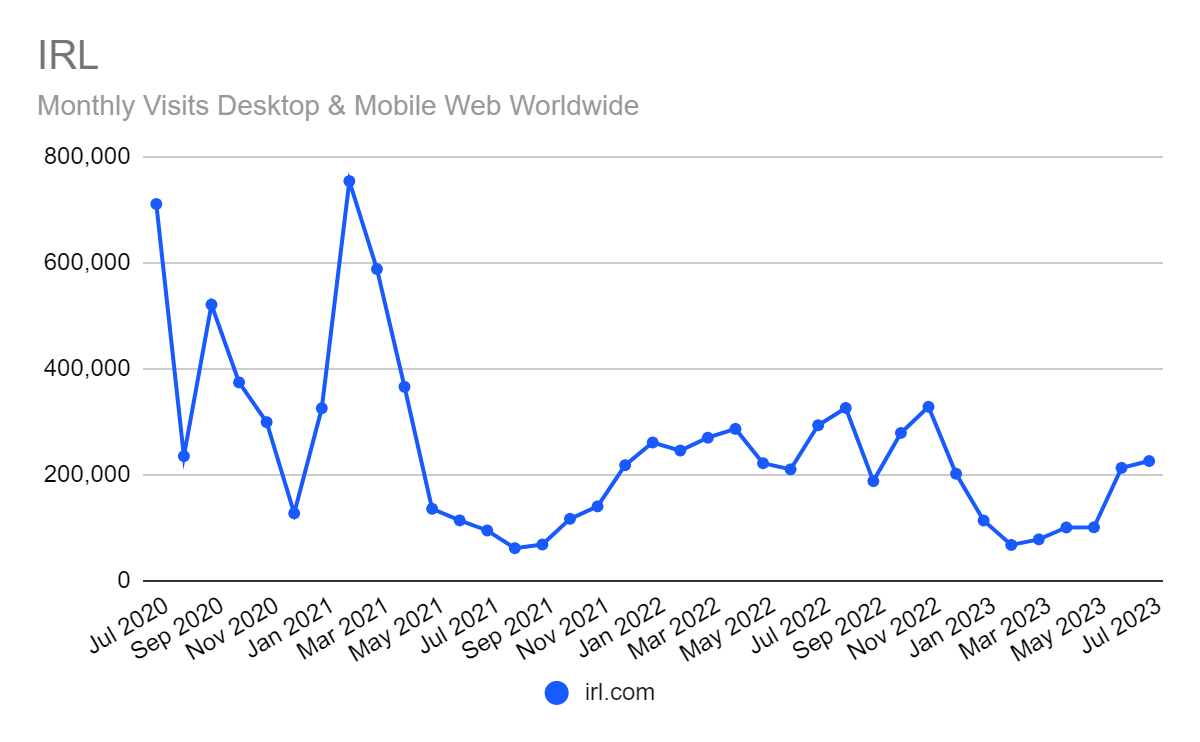
A similar pattern played out on the web. By June and July, most of the visitors to the website were probably going there to find out what had happened to the app, which shut down in June.
The Similarweb Insights & Communications team is available to pull additional or updated data on request for the news media (journalists are invited to write to press@similarweb.com). When citing our data, please reference Similarweb as the source and link back to the most relevant blog post or similarweb.com/blog/insights/.
Contact: For more information, please write to press@similarweb.com.
Disclaimer: All names, brands, trademarks, and registered trademarks are the property of their respective owners. The data, reports, and other materials provided or made available by Similarweb consist of or include estimated metrics and digital insights generated by Similarweb using its proprietary algorithms, based on information collected by Similarweb from multiple sources using its advanced data methodologies. Similarweb shall not be responsible for the accuracy of such data, reports, and materials and shall have no liability for any decision by any third party based in whole or in part on such data, reports, and materials.

David covers social media, digital advertising, and generative AI. With a background in web trends since the 1990s, he’s also the author of "Social Collaboration for Dummies".
Give it a try or talk to our insights team — don’t worry, it’s free!