
3 of the Sharpest Minds Weigh in on the State of Gen AI in 2026
by Darrell Mordecai3 Min.
Aug 26, 2026
 Insights
Often counted out in a search engine market dominated by Google, Microsoft’s Bing showed early gains from Tuesday’s announcement of a new Bing search incorporating OpenAI’s ChatGPT technology.
Microsoft has embarked on a “multiyear, multi-billion dollar” partnership and investment in OpenAI and has also announced plans to incorporate ChatGPT and DALL-E image generation capabilities into its Office suite.
Adding ChatGPT to the search engine means Bing will be able to respond to a query with an essay about the topic and elaborate on the answer in response to further prompts, rather than simply spitting out a list of links. This version of AI chat is also informed about current events, as opposed to the standard ChatGPT at chat.openai.com, which was trained on data from 2021.
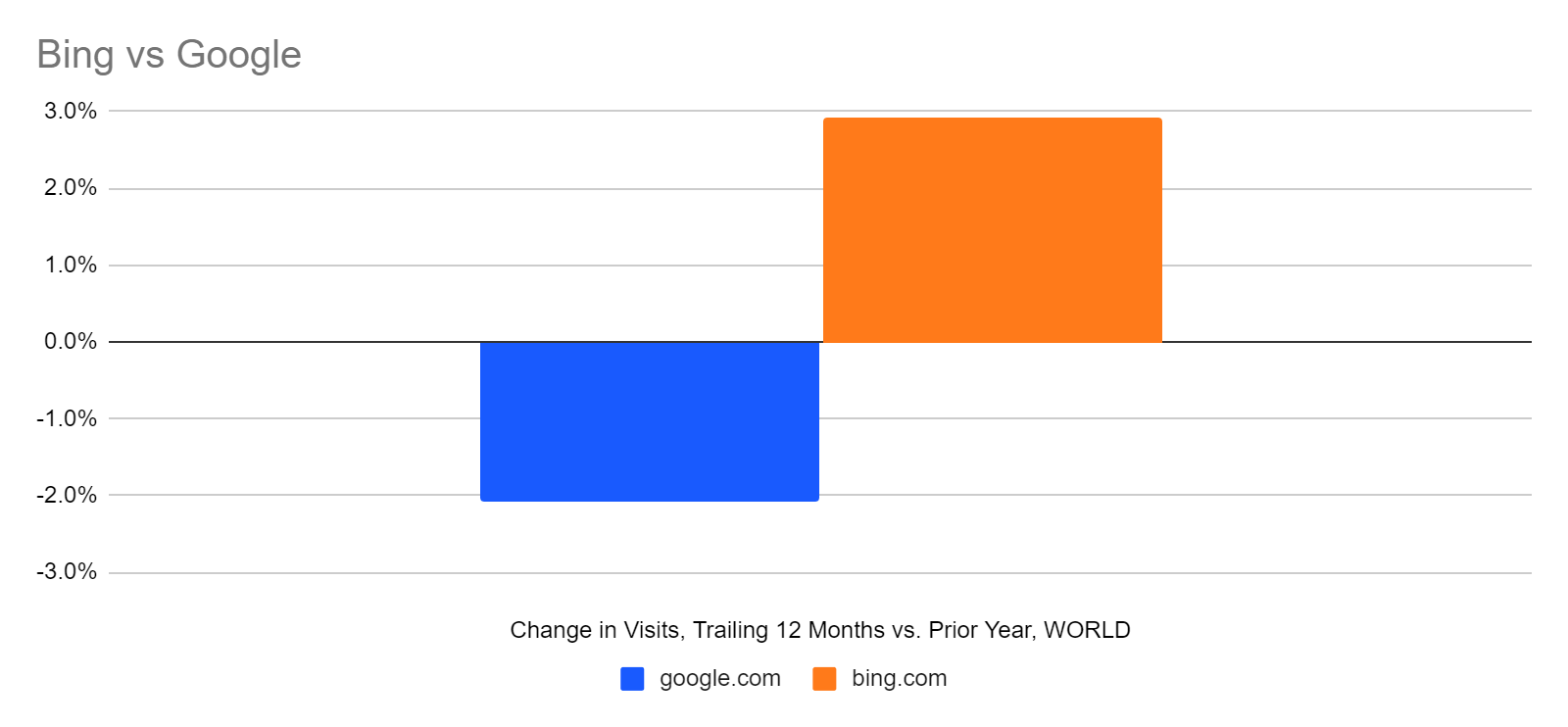
Traffic to the bing.com main domain is up 2.9% over the past year, while traffic to google.com is down 2.1%.
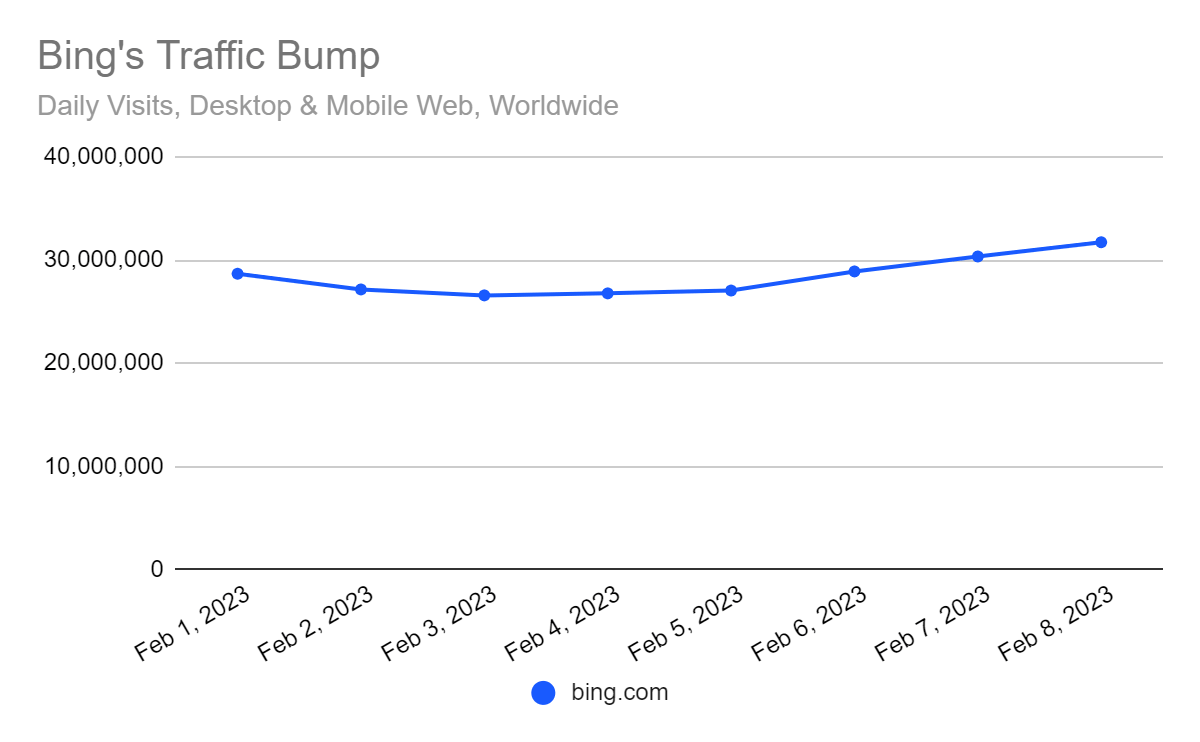
The immediate traffic bump from the ChatGPT announcement doesn’t look particularly impressive on a chart, but by Wednesday traffic to the site was 15% higher than on an average day over the last six months.
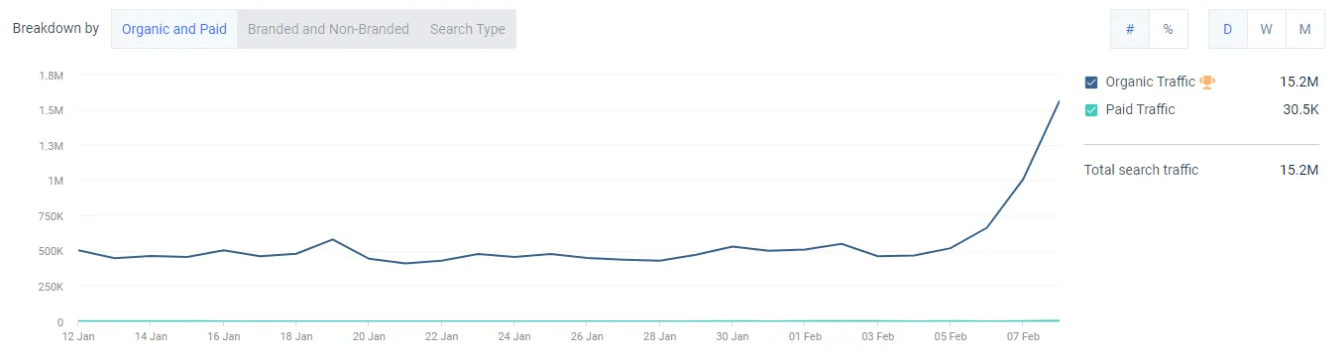
Meanwhile, a weekly search keywords breakdown shows a 700% increase for the term “bing ai” – people trying to find out more about the news and what it means.
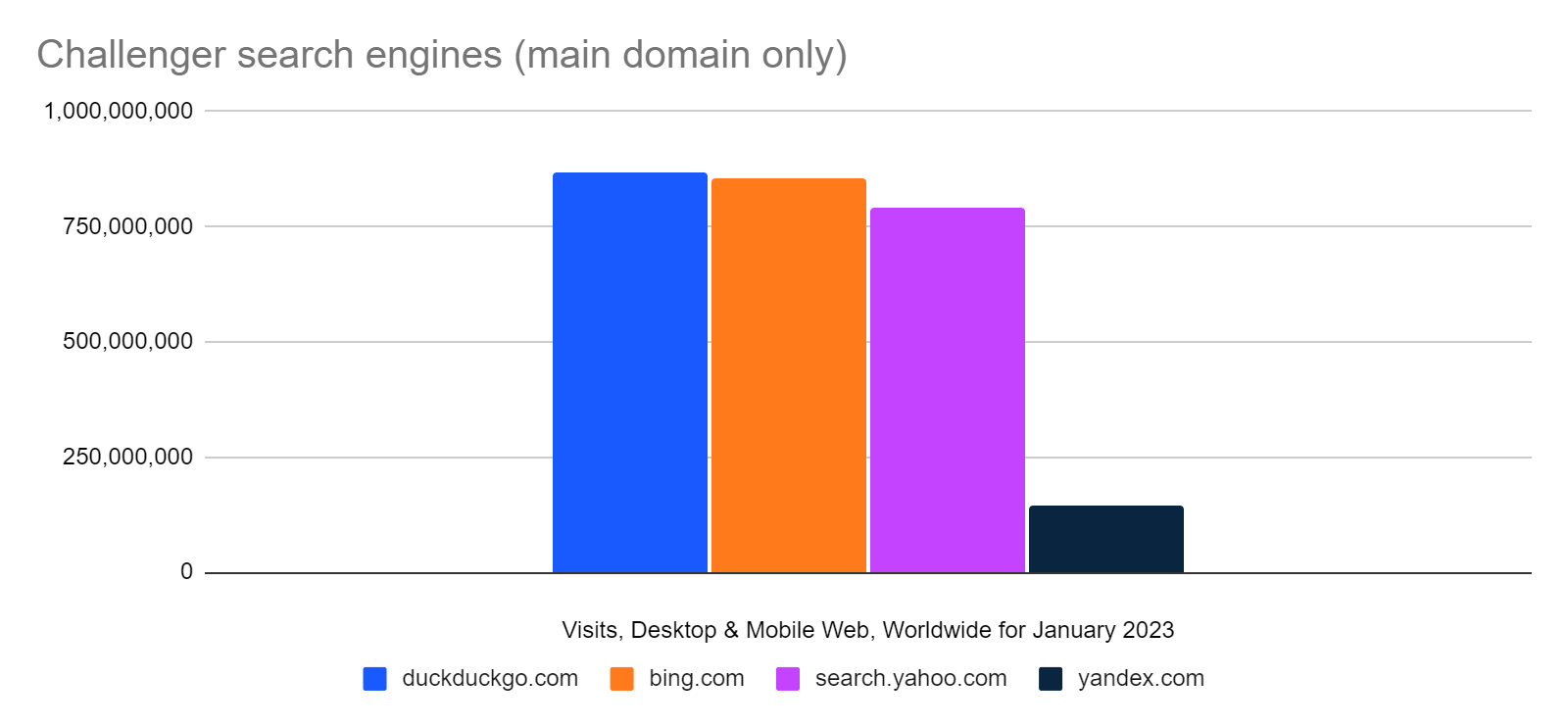
These encouraging signs for Bing have to be taken with a grain of salt – and a sense of scale. Google remains a long ways away from facing any kind of serious competitive threat, and as of January Bing lagged behind DuckDuckGo among the challenger search engines.
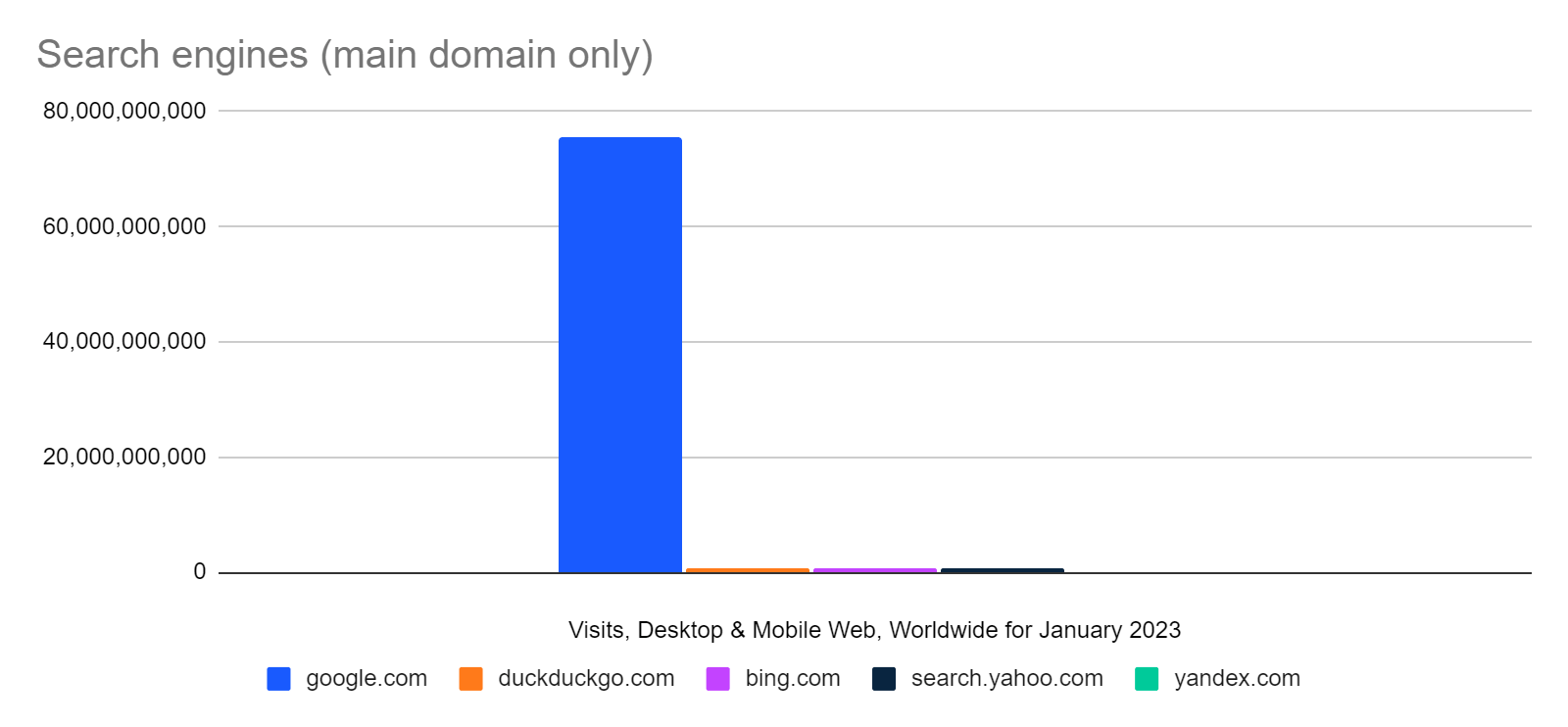
If we take Google out of the mix, here’s what the ranking of the challengers looks like.
The Similarweb Insights & Communications team is available to pull additional or updated data on request for the news media (journalists are invited to write to press@similarweb.com). When citing our data, please reference Similarweb as the source and link back to the most relevant blog post or similarweb.com/blog/insights/.
Disclaimer: All data, reports and other materials provided or made available by Similarweb are based on data obtained from third parties, including estimations and extrapolations based on such data. Similarweb shall not be responsible for the accuracy of the materials and shall have no liability for any decision by any third party based in whole or in part on the materials.

David covers social media, digital advertising, and generative AI. With a background in web trends since the 1990s, he’s also the author of "Social Collaboration for Dummies".
Give it a try or talk to our insights team — don’t worry, it’s free!