
The Top 100 Most Visited Websites in the World (August 2026)
by Shai Belinsky10 Min.
Sep 17, 2026
 Ecommerce Intelligence
Are you an established brand or a side hustler looking to grow? Choosing the right marketplace (Amazon, Walmart, eBay etc) can make or break your ecommerce success.
But with so many selling platforms, what ones are worth your time (and money)?
Variety, convenience, competitive pricing, and trustworthiness attract consumers to marketplaces, and the trends indicate that traffic to these sites will not slow down anytime soon.
Using Similarweb’s market analysis tool, we can see that online marketplaces received over 53.5 billion visits in the past year alone. This high traffic volume highlights their effectiveness in attracting and engaging customers.

Let’s break down the top online marketplaces in the US, explore which products thrive where, and compare costs so you can make an informed decision on where best to sell your products.
Not all online markets are the same. When selecting the best fit for your business, it’s important to make sure you’ve covered all the angles:
💸 Total cost of selling, including listing fees, transaction fees, and subscription costs
🛍️ The product categories you specialize in, as certain selling platforms cater better to specific niches
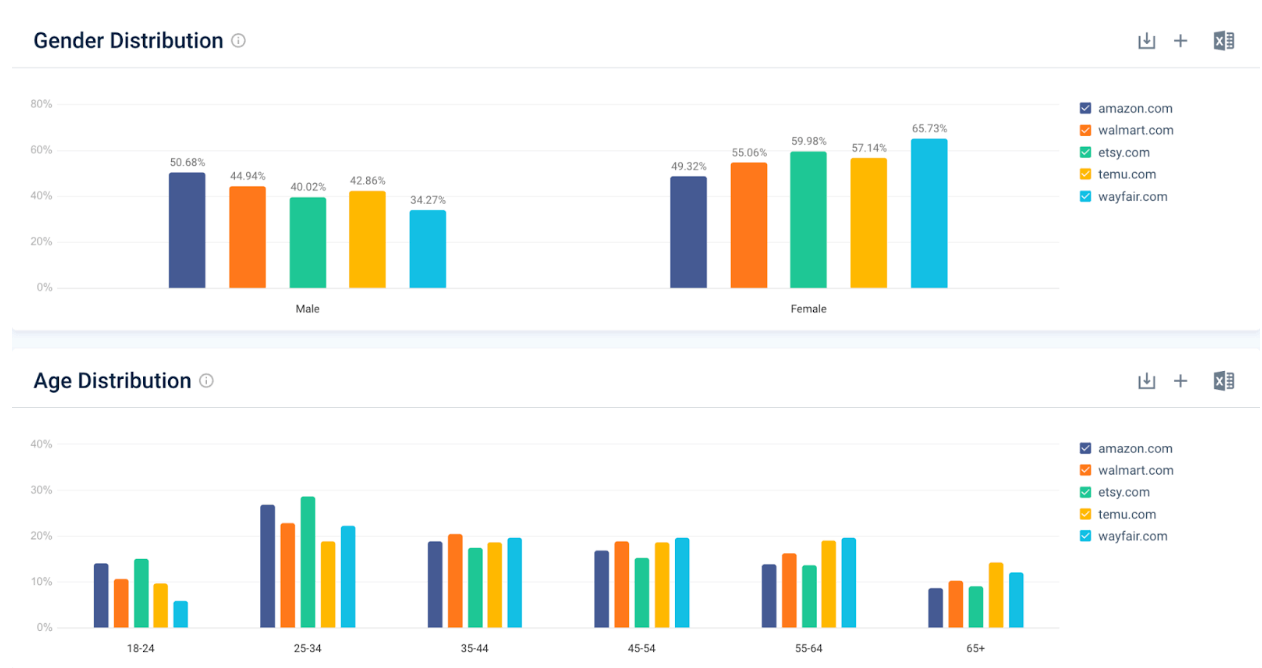
📈 Audience demographics of each marketplace. Use Similarweb data to gain a comprehensive view of specific marketplace users
🏆 The level of competition. Larger marketplaces may bring more buyers, but also more sellers
🤓 Ease of use and seller tools, such as marketing resources, analytics, and management dashboards
🚚 Who will handle fulfillment and shipping? (e.g., Amazon’s FBA takes care of it, while Etsy and eBay leave it up to sellers.)
Remembering these, you can choose a marketplace that aligns with your business goals and growth strategy.
It’s not just about traffic. The most successful online marketplaces excel in their niches.
Similarweb’s market analysis shows that Amazon is a clear industry leader, with over 50% of all marketplace traffic. But can smaller, niche marketplaces compete?
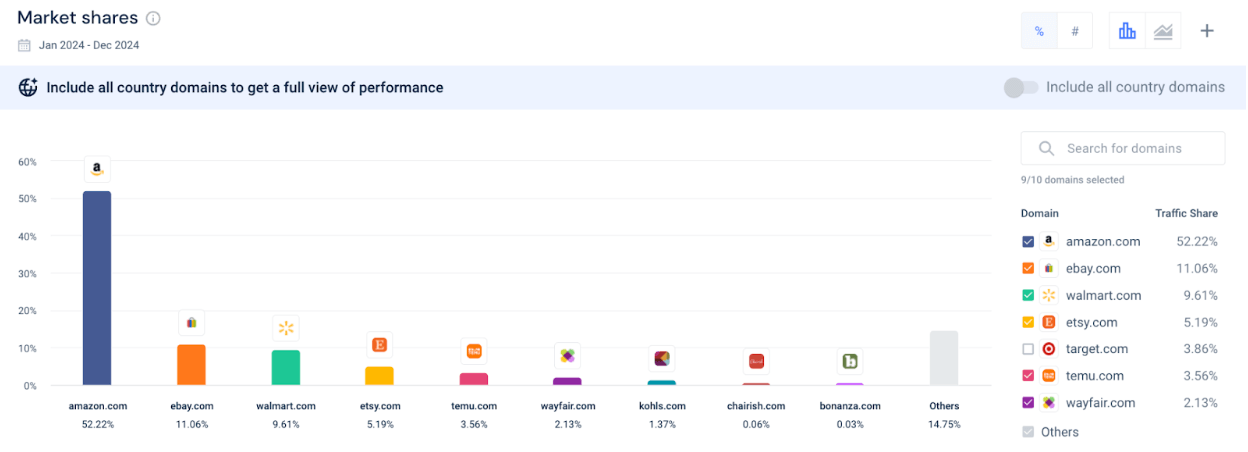
Here are the top online marketplaces ordered by the amount of traffic. Let’s take a look at the pros, cons, pricing, and website traffic data of each.
Looking for reach? Then Amazon is hard to beat. With over 2.327B monthly visits to amazon.com, it dominates US ecommerce.

Best for: It has its hands on almost everything, including tech gadgets, books, groceries, beauty products, and household essentials. If it can fit in a box, you can sell it on Amazon.
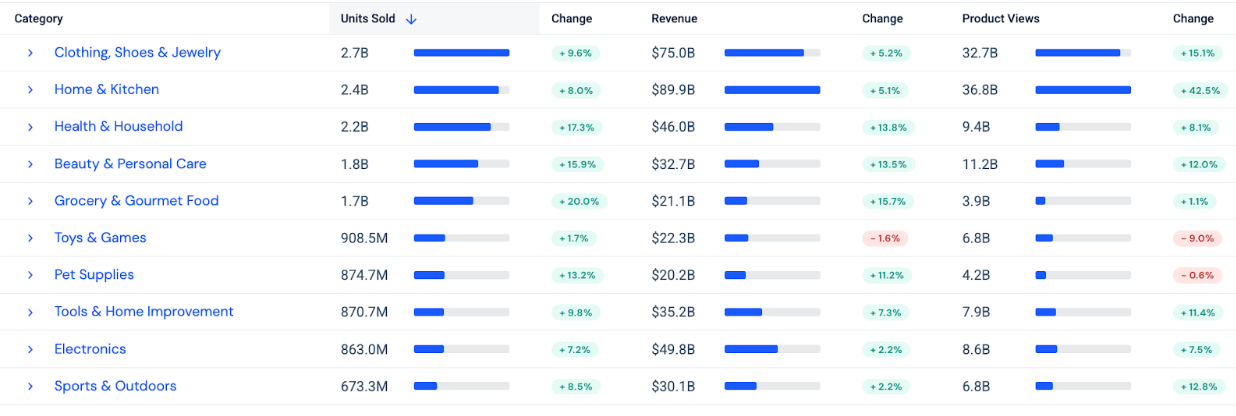
Here’s an overview of Amazon’s top 10 best-selling categories from Similarweb’s Retail Intelligence.
Seller fees: The individual plan fee is $0.99 per item sold plus referral fees and applies if you sell fewer than 40 items per month. Otherwise, the professional plan costs $39.99/month plus referral fees (8-15% depending on category).
Pros:
Cons:
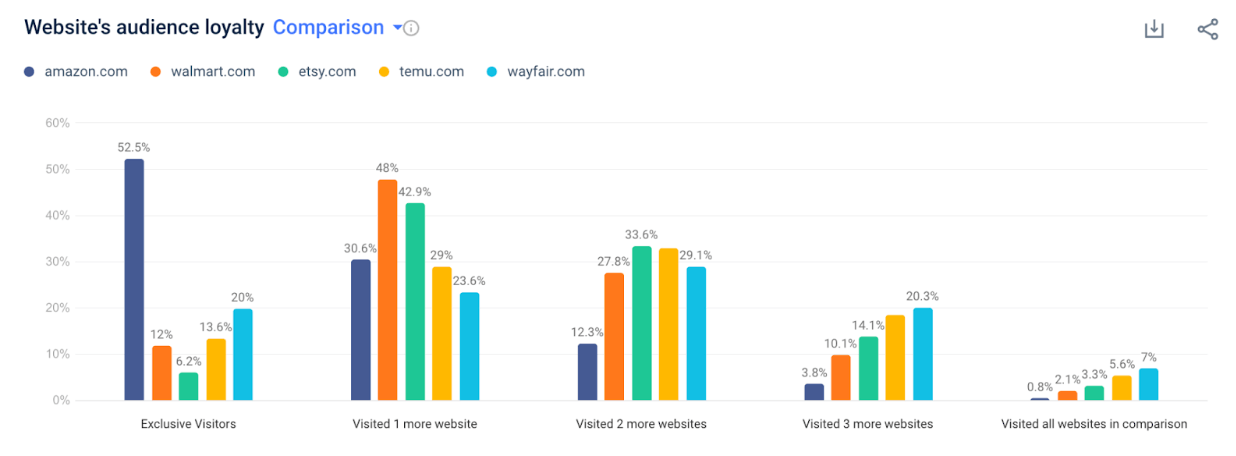
👉 Bonus tip: The graph below shows 52.5% of shoppers exclusively browse Amazon when shopping. That alone could be a huge percentage of your audience.
Known as the marketplace for unique finds, ebay.com pulls in 493M monthly visits, making it a strong contender for sellers looking to move niche products, collectibles, and secondhand goods.

Best for: Vintage items, collectibles, refurbished electronics, and rare finds.
Seller fees: eBay provides free listings for up to 250 items per month, but final value fees range from 12.35% to 15% plus a $0.30 transaction fee in most categories.
Pros:
Cons:
With 428.4M monthly visits, Walmart.com has grown rapidly, attracting both consumers and sellers with its trusted brand.

Best for: Everyday products like groceries, household essentials, electronics, and health products.
Seller Fees: No monthly fee, and referral fees range from 5-15% depending on the category.
Pros:
Cons:
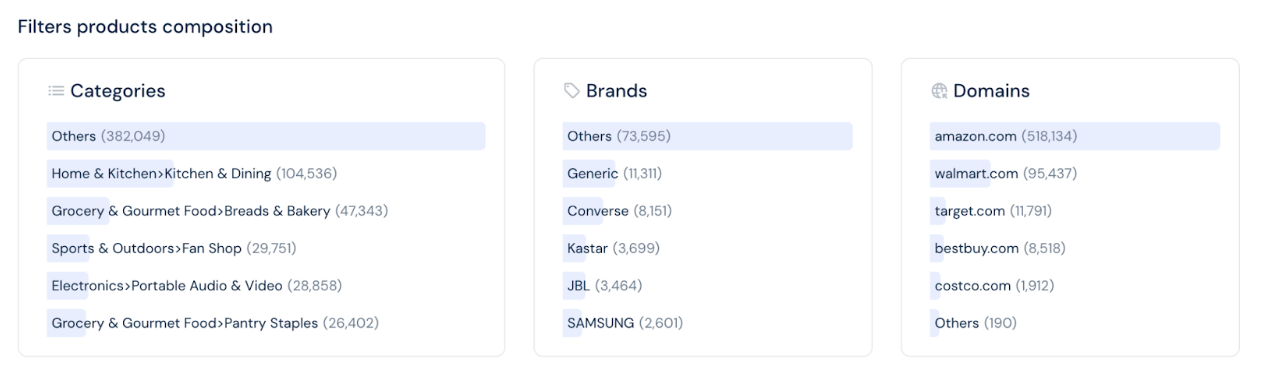
👉 Bonus tip: If you’re already selling on Amazon, Walmart can help you diversify your audience without hefty additional costs. Similarweb’s Retail Intelligence shows a buying pattern overlap between Amazon and Walmart in top-selling categories.
Etsy’s community of creative shoppers brings in 231.4M monthly visits to etsy.com, perfect for artisans and small business owners.

Best for: Handmade goods, vintage items, craft supplies, and personalized products.
Seller Fees: Etsy charges a listing fee of $0.20 per item. They also charge a transaction fee of 6.5% and a 3% + $0.25 payment processing fee per sale.
Pros:
Cons:
Temu is gaining traction rapidly, known for budget-friendly products and competitive pricing, attracting 158.6M monthly visits to temu.com.

Best for: Affordable fashion, accessories, household items, and gadgets.
Seller Fees: Temu charges a 5%—20% commission and a 0.3% payment processing fee on each sale. Premium sellers are required to pay a monthly subscription fee of $39.
Pros:
Cons:
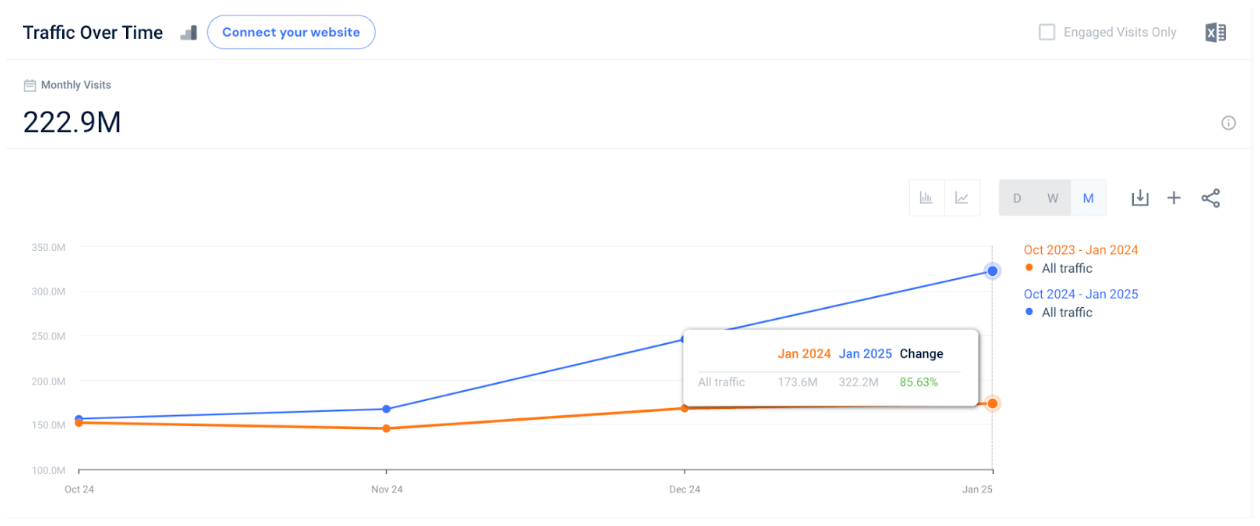
👉 Bonus tip: If you can offer competitive pricing, Temu is worth exploring to capture cost-conscious shoppers. Between January 2024 and January 2025, Temu’s audience grew by a massive 85.63%.
Wayfair focuses on furniture and home goods, and its 94.81M monthly visits to wayfair.com make it a top choice for home-focused sellers.

Best for: Furniture, home décor, appliances, and related products.
Seller Fees: Instead of charging a seller fee, Wayfair buys inventory directly from suppliers at wholesale prices, making it more of a retail partner than a traditional marketplace.
Pros:
Cons:
Kohl’s has entered the ecommerce space with 60.93M monthly visits to kohls.com, using its brand recognition to attract shoppers. Its marketplace is invite-only for third-party sellers, which makes entry more restrictive.

Best for: Apparel, home goods, beauty products, and activewear.
Seller Fees: Kohl’s fees are commission-based and vary by category.
Pros:
Cons:
Chairish is a curated marketplace with 2.531M monthly visits for chairish.com, focusing on vintage and high-end home furnishings.

Best for: Vintage furniture, art, and home décor.
Seller Fees: Chairish charges sellers a commission based on their chosen plan, ranging from 40% for casual sellers to as low as 3% for high-value sales. Fees apply for members at Premium ($49/month), Plus ($99/month), and Elite ($149/month), with lower commissions offered to high-volume and professional sellers.
Pros:
Niche marketplace for high-end home goods
Targeted audience of interior design enthusiasts
Higher average product prices
Cons:
Higher commission fees than average
Strict product guidelines to adhere to their vintage, antique, and designer brand niche
Requires curated, high-quality listings to get listing approval
Bonanza caters to niche markets and offers a flexible, seller-friendly environment. With 1.4M monthly visits to bonanza.com, it’s no Amazon. But it excels in connecting consumers with unique, out-of-the-ordinary products.

More importantly, Bonanza allows sellers to import listings directly from eBay, Amazon, and Shopify, making it easy to expand.
Best for: A wide range of products, including collectibles, fashion, and health & beauty.
Seller Fees: There is no cost to listing items on Bonanza. It charges a 3.5% final value fee (FVF) on sales up to $1,000, with an additional 1.5% on amounts exceeding $1,000, plus a $0.25 transaction fee per sale for non-members.
Pros:
Cons:
Success on marketplaces goes beyond just listing products. You need marketplace intelligence tools like Similarweb Retail Intelligence to optimize your listings, improve product visibility, and attract more customers.
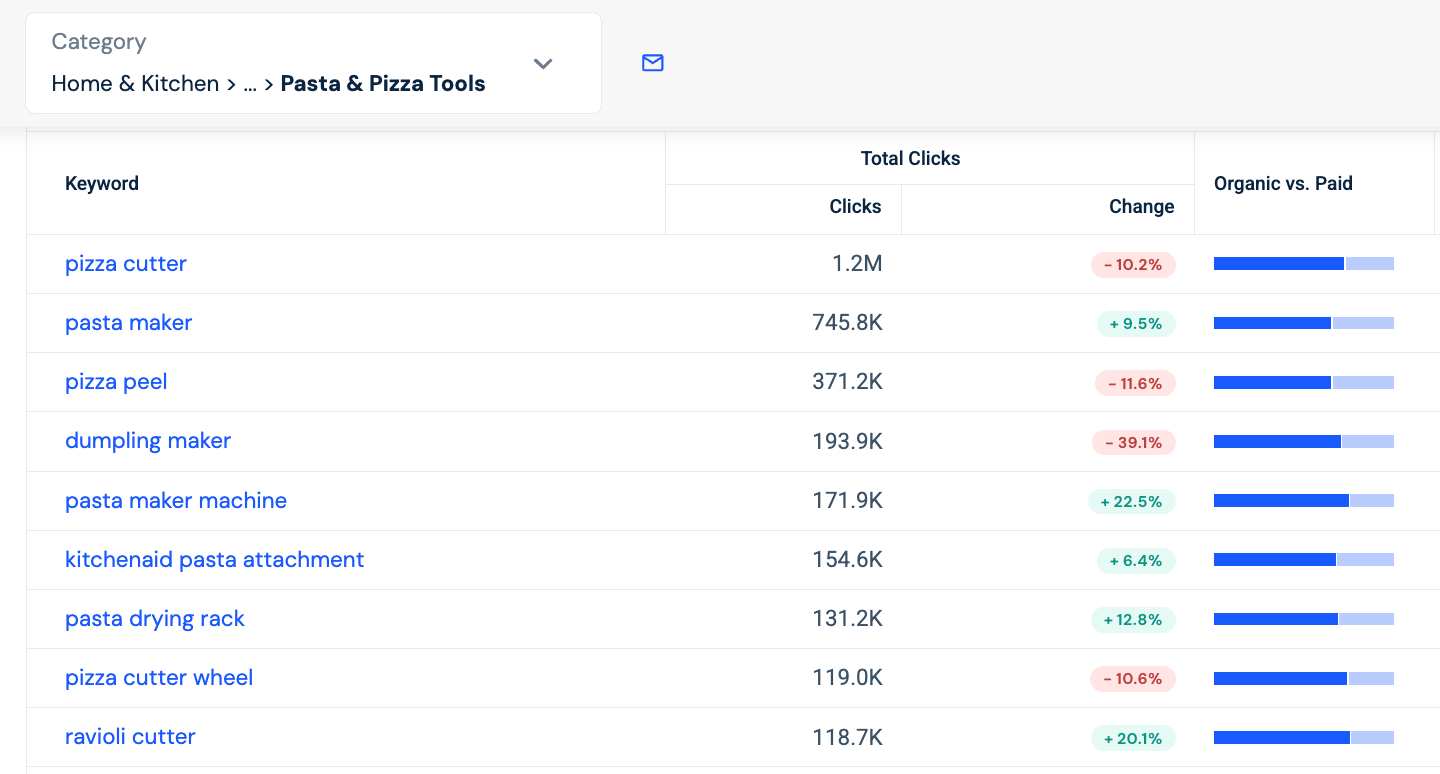
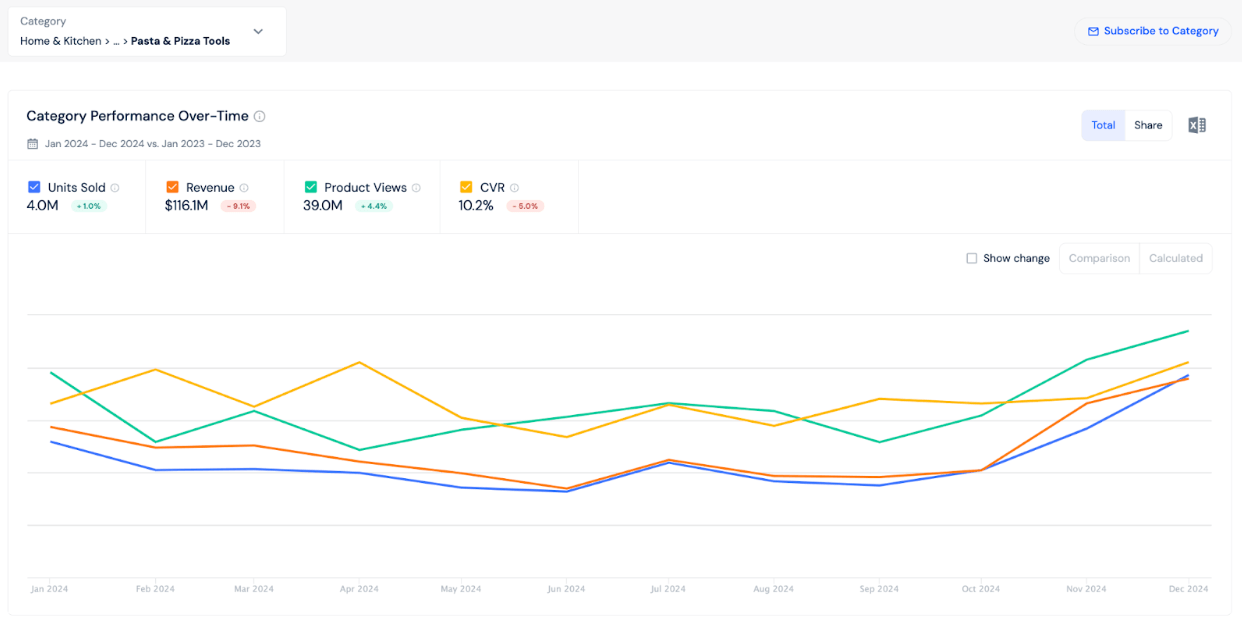
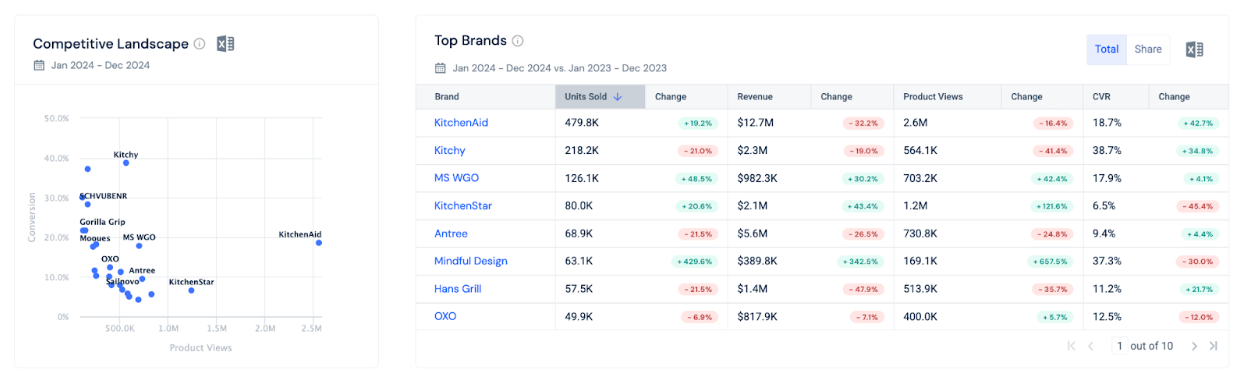
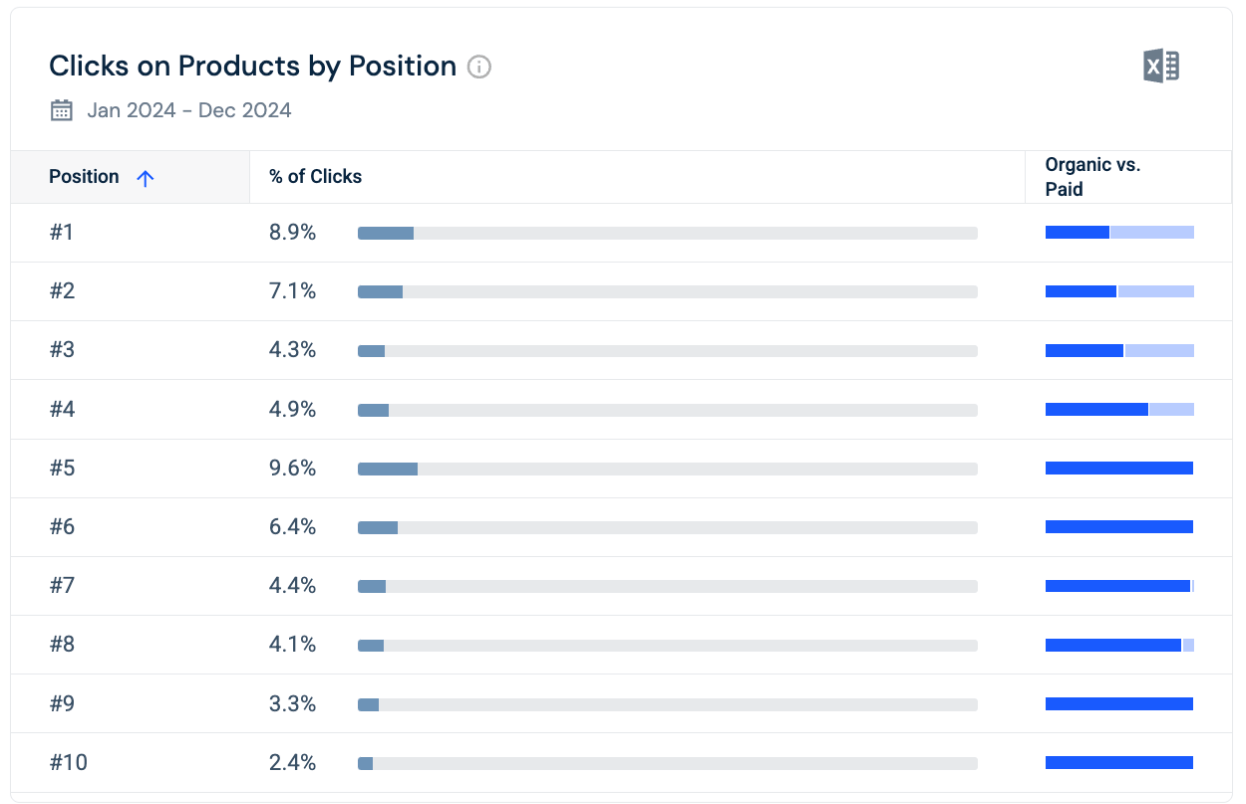
💡 Imagine you’re selling pasta-makers. How can you analyze Amazon Marketplace to see if it’s the right selling platform for you
Keyword Research: Understanding what shoppers search for within your category and optimize your product listings accordingly.
Trend Analysis: Track seasonal demand, competition, and consumer behavior over time. The correlation between product views and units sold indicates this is an impulse buy and persuasive product listings could help you win over customers.
Competitor Insights: Who are the top brands in your niche, and what are they doing differently? How can you adjust your marketing, pricing, and products to better compete? Analyze consumer behavior across marketplaces to see what piques their interest.
Advertising Performance: Optimize paid marketplace promotions by analyzing data on conversions and click-through rates.
By using Similarweb Retail Intelligence and refining marketplace strategies based on the data, sellers can optimize their consumer journeys and gain more traction to their products.
Choosing the right marketplace isn’t about finding “the best” one. It’s about finding the right mix. Diversify your selling platforms, tailor your approach for each audience, and keep an eye on performance data (hint: Similarweb is your friend here).
And try not to put all your eggs in one basket. Test multiple marketplaces, track performance, and continuously refine your strategy.
Still confused? Take a look at some of our online marketplace comparisons:
Which online marketplace is best for my business?
The best marketplace depends on your products, target audience, and budget. For example, Amazon offers a massive reach, while Etsy is great for handmade goods. When choosing, consider factors like fees, competition, and audience demographics.
How much does it cost to sell on online marketplaces?
Costs vary by platform. Some, like eBay, charge listing and transaction fees, while Amazon has subscription plans and referral fees. Always factor in listing fees, commissions, and fulfillment costs when calculating profitability.
How can I increase sales on online marketplaces?
Optimize product listings with high-quality images, detailed descriptions, and relevant keywords. Use marketplace tools like Similarweb Retail Intelligence for trend analysis, competitor insights, and advertising performance. Promotions and customer reviews can also boost sales.
Should I sell on multiple marketplaces?
Yes! Diversifying across multiple marketplaces reduces risk and expands your customer reach. Different platforms attract different audiences, so selling on a mix of general and niche marketplaces can maximize your sales potential. Track performance and refine your strategy to optimize results.

by Gila Holder
Content Marketing Manager
Gila has a background in creating engaging content across ecommerce and tech. She's committed to staying ahead of the latest digital marketing and social media trends (as hard as this is). When she’s not sharing marketing insights, you’ll find her exploring hiking trails or unwinding at the yoga studio.
Put the full picture at your fingertips to drive product views and sales